


goldwoven
Apr 8, 2026
Bamboo Basket vs PP Rattan: Better Choice for Humid Regions?
Quick Summary
In a damp bathroom, PP rattan usually feels easier to live with because it suits wiping, daily handling, and repeated moisture better than most natural woven options. Goldwoven’s home storage pages position woven home storage as practical, decorative, and suitable for everyday organization, while its basket-care content keeps coming back to airflow, drying, and room placement as the real reasons baskets stay fresh.
Natural woven texture still matters. It simply tends to feel better in a dry linen corner, an open shelf, or a bedroom bench than beside a damp bath mat at 8 a.m. after two showers.
The best decision is rarely about trend. It is about how the basket will be used on an ordinary Tuesday: where it sits, what goes inside, how often it gets wiped, and whether the room ever really dries out.
For sample review, customization, and quality checkpoints, Goldwoven also provides a customization page, an inspection standards page, and a contact page that fit a more structured sourcing workflow.
There is a familiar moment in humid homes. The shower has been off for twenty minutes, but the mirror still looks hazy, the floor near the vanity is cool under bare feet, and the hand towel on the hook feels only half dry. In that kind of room, a bamboo basket can look calm and beautiful, yet the real question starts a little later: will it still feel right after steam, splashes, wiping, and slow drying become part of the routine? Goldwoven’s own care article makes that tension very clear. Strength and freshness are not only about appearance; they depend on airflow, drying habits, what gets stored, and where the basket sits in the room.
That is why this article takes a firm position. In humid regions, PP rattan usually makes more sense for hard-working bathroom storage and damp-prone daily use. Natural woven material still has a place, and a good one, but it usually performs best where the room breathes, the contents stay dry, and the basket is not asked to absorb every small mess of the day. The goal here is not to make both sides sound equally right. The goal is to make the choice easier, sharper, and more useful.
Bamboo basket vs PP rattan for humid regions: the real question
Most comparisons start too high up. They ask which material is more natural, which one looks warmer, or which one feels more premium on a styled shelf. Those questions matter, but they are not the first ones that matter in a humid region. The first questions are more ordinary than that. Does the room stay damp after people have left it? Does the basket sit close to the floor? Does it hold dry paper, or does it end up receiving a washcloth that is “almost dry” and then forgotten for four hours? Those details decide far more than a mood board does.
A woven basket rarely fails in one big dramatic moment. More often, it becomes slightly annoying first. It smells a little closed after cleaning. The inside corner feels cooler and less dry than the rest. A lid looks tidy but keeps the air stuck inside. Goldwoven’s guide on preventing cracks and odors speaks directly to that kind of real-life use. It ties freshness to airflow, drying, and storage habits rather than to wishful thinking about material alone.
That is why the better question is not “Which one is better?” The better question is “Which one matches the room’s daily behavior?” In a dry guest room, that answer can lean natural. In a bathroom that never quite dries before the next shower, the answer usually shifts toward PP rattan. Once that lens is in place, the decision stops feeling abstract. It starts to feel obvious.
Quick comparison table
Point of comparison | Natural woven / bamboo-style look | PP rattan |
First impression | Warm, soft, handcrafted | Clean, neat, more uniform |
Best room type | Dry shelf, bedroom, airy linen area | Bathroom, vanity, utility corner |
Response to humidity | Needs more help from airflow and drying | Usually easier to manage in damp rooms |
Daily wipe-down | More care needed after cleaning | Simpler to wipe and reuse |
Risk of stale odor | Higher if moisture stays trapped | Lower in fast, repeated use |
Best shape in humid rooms | Open forms only, and only in lighter use | Open trays, shelf organizers, jars, and easy-clean formats |
The table follows the same practical logic Goldwoven uses across its home storage content and woven basket care content: room condition, airflow, and use pattern matter as much as the material name.
Why humid rooms change the answer so much
Humidity does not just mean “a little more moisture.” It changes timing, and that is what trips people up. A towel dries more slowly. A cabinet holds stale air longer. A basket on tile collects cool dampness from below even if the top still looks fine. In a dry climate, these things pass quickly. In a humid one, they stay around long enough to matter. Goldwoven’s woven basket care article keeps returning to that point, and it is probably the most practical point on the page. Odor is often just moisture that stayed too long in the wrong place.
There is also the issue of routine. Damp rooms get cleaned more often, and baskets inside them get moved more often. One day it is a quick wipe after the sink splashes. Another day it is a deeper clean around the vanity. Then the basket slides back into place before the room has aired out properly. That small cycle repeats again and again. Goldwoven’s article on durability points to the rim, handle attachment, and base as the places where wear shows up early. In a humid room, those small stresses do not disappear. They pile up.
For that reason, humid-room storage needs a different kind of honesty. The prettiest material is not always the easiest material. The most natural-looking option is not always the most relaxed option to use every day. There is no shame in that. A bathroom is not a showroom. It is a working room. When a room has to work hard, the material inside it should work hard too.
That does not mean natural woven storage has no place in humid regions. It means the placement has to be smarter. It belongs where the room still has breath left in it: an upper shelf, a dry niche, a bedroom, or a quiet linen corner. Put simply, humidity does not cancel style. It just punishes denial.

This kind of basket works best in dry, airy spaces. It adds warmth to open shelves and keeps everyday storage looking relaxed and natural.
Bathroom storage: where PP rattan usually wins
Bathroom storage is where the comparison stops being theoretical. Steam rises quickly, but it also settles quietly. The shelf near the sink catches mist, the corner near the toilet holds still air, and anything close to the floor feels the room’s dampness twice—once from the air, once from the tile. In that setting, PP rattan usually has the calmer temperament. It does not ask for much sympathy. It asks for a wipe and a place to sit.
That matters because bathroom storage is rarely used in a perfect way. Cotton pads are dry, but the fingers touching the box are wet. Backup tissue is dry, but the basket sits beside a sink edge that gets splashed six times a morning. A tray holds small bottles, then someone wipes the surface around it and slides it back before the glass top has fully dried. PP rattan tends to take that kind of ordinary misuse in stride. Natural woven material can handle some of it, of course, but it is less forgiving when that same pattern repeats every day.
Goldwoven’s home storage pages do not make dramatic promises here, and that is part of their value. The language stays practical: organization, display, decorative function, retail-ready shapes, flexible development. Read beside the care article, the conclusion is easy to draw. In a humid bathroom, low-fuss maintenance matters more than romantic material language. That is where PP rattan usually wins the room.
There is also a visual misunderstanding worth clearing up. Practical does not have to mean cold. A well-shaped PP rattan tray, jar, or organizer can still look calm, warm, and intentional. The room does not lose its softness just because the storage becomes easier to manage. In fact, many bathrooms look better when the storage feels a little more disciplined. The room stops fighting itself.

A tray like this feels right in humid spaces because it is simple to use, easy to move, and easy to wipe clean. For bathrooms and vanity areas, that kind of practicality matters every day.
Simple rule for bathroom use
A quick rule helps:
Open formats suit humid rooms better than closed ones.
Dry contents suit woven storage better than “almost dry” contents.
Easy-lift shapes usually age better than awkward deep boxes.
PP rattan fits the daily wipe-down rhythm more naturally.
Goldwoven’s care guide says nearly the same thing in longer form: open or slatted designs often stay fresher in humid rooms, while trapped moisture and poor airflow create most of the frustration.
When a bamboo basket still makes sense in humid climates
This part deserves more respect than it usually gets. A humid region is not one giant bathroom. Even in coastal cities and tropical apartments, some spaces stay much drier than others. A bedroom shelf near a window is one thing. A closed vanity cabinet beside a shower is another. Treating them like the same environment leads to bad decisions and unfair blame on the material.
A bamboo basket still makes sense when the room is calmer than the climate outside. Think of a spare blanket folded on a bedroom bench, or a linen shelf that gets opened often enough to breathe. Think of an entry console that needs a little warmth around keys, sunglasses, and unopened mail. In these scenes, natural woven texture does something lovely. It lowers the temperature of the room visually. It makes hard surfaces feel less hard.
This is also where natural woven material feels emotionally right. There is a softness to it that PP rattan does not always try to imitate. The slight irregularity, the warmer tone, the hand-finished look—those things matter in quiet spaces. A basket on an airy shelf does not need to survive toothpaste splashes and damp cloths. It only needs to hold its shape, stay clean, and make the room feel finished. Under those conditions, natural woven storage has real charm.
Still, placement decides everything. A bamboo basket in a humid climate should not sit where the room stores its mess. It should sit where the room stores its calm. That sounds poetic, but it is practical. Dry contents, open placement, and enough air movement do more for long-term freshness than any scented liner ever will. Goldwoven’s care guide is direct about that. Drying and airflow are the whole story.
Good scenes for natural woven storage
Natural woven storage tends to feel best in scenes like these:
upper shelves with folded linens
bedroom corners with throws or magazines
entry tables with small daily carry items
closet tops with hats, scarves, or seasonal accessories
living-room shelving where the basket reads as part of the décor, not as a utility bin
These are not dramatic spaces, and that is exactly why they suit natural woven material. The room asks for texture, not toughness.
Bamboo basket vs PP rattan for humid regions: a 30-second judgment test
When a material choice feels fuzzy, a fast test helps. Walk into the room and ignore the basket for a second. Look at the mirror, the floor, the hooks, and the shelf edges. Does anything still look damp after the room is supposedly “done” being used? If yes, the room is already telling the answer. It wants easier maintenance, faster recovery, and less sensitivity. That usually means PP rattan.
Next, think about what will actually go inside. This part matters more than people admit. Unopened tissue rolls are dry. Skincare bottles are not wet, but their bases often are. Hand towels are never as dry as they look in a humid room. A basket that receives only fully dry items lives a much easier life than one that keeps inheriting moisture secondhand. Goldwoven’s article on odor control says the same thing in different words: what gets stored inside often matters as much as the weave itself.
Then look at the shape. Shallow open forms usually behave better than deep closed ones in damp rooms. A lid can look tidy, but it can also trap yesterday’s humidity until tomorrow morning. An open tray may look simpler, yet it often feels fresher and more useful over time. That is why shape decisions often matter more than people expect. Goldwoven’s related basket content on shape and retail fit keeps pointing to the same idea: shape decides use before material even gets its chance.
Finally, ask one last plain question: how patient is the room allowed to be? If the answer is “not patient at all,” then the room needs the more forgiving material. If the answer is “there is time, airflow, and lighter use,” then natural woven storage can still be a smart choice. This is not a luxury judgment. It is just a truthful one.

Woven texture brings a softer and warmer feeling to a room. In drier spaces, that natural look is often what makes the whole setting feel more lived in.
How to use each material better
A lot of frustration comes from using the right basket in the wrong way. Even the better material can feel disappointing if the routine around it is careless. So, instead of stopping at comparison, it helps to talk about use. A good basket should suit the room, but it should also suit the habits inside that room.
Using PP rattan well
PP rattan performs best when it is treated like the practical tool it is. Open trays work well for countertop items that get touched every day. Medium-height organizers fit backup toiletries, dry paper goods, or grooming tools that need quick access. In damp rooms, simpler shapes often feel better than overdesigned ones because they make cleaning and resetting less annoying.
There is also a styling trick here. Keep the palette quiet. Soft cream, tan, natural beige, and clear glass usually let PP rattan feel warmer and less “plastic” in the room. The material behaves best when it is not trying too hard to announce itself. It works quietly. That is part of its charm.
Using natural woven storage well
Natural woven storage needs a little more respect, not a lot more work. Start with dry contents only. Keep the basket off the floor if the room tends to stay cool and damp below knee level. Leave a little breathing space around it instead of wedging it into a sealed cabinet. These are small choices, yet they solve most of the problems people later blame on the material.
A bamboo basket also benefits from lighter categories. Think paper goods, clean folded cloths, soft accessories, or objects that arrive dry and stay dry. Once the room stops asking it to carry invisible moisture, the basket’s strengths become much easier to enjoy. The texture looks calmer, the room feels warmer, and the basket stops feeling like something that needs watching.
Small habits that matter more than people think
A few habits change everything:
Let the basket dry fully after wiping.
Do not hide damp textiles in “just for now” storage.
Keep baskets a little away from the splash line near sinks.
Prefer open forms in rooms that hold steam for long stretches.
Rotate stored items so nothing sits pressed into the same humid corner for weeks.
None of these steps are dramatic, and that is why they work. Goldwoven’s care guide is strong because it stays that grounded. It talks about the life a basket actually has, not the life a styled photo suggests.
Style, room pairing, and why the “feel” still matters
Even in a practical comparison, style should not be treated like fluff. It affects whether a room feels settled or tense. Natural woven material usually softens a space first. It pairs well with painted wood, linen, matte ceramics, pale walls, and anything else that benefits from texture rather than shine. When the room is dry enough, that softness can be the exact thing that makes the space feel lived in instead of staged.
PP rattan does something different. It gives order. It helps a shelf look clearer, a vanity look calmer, and a collection of small items look less accidental. That quality is easy to underestimate until the room is busy. In a bathroom full of mirrors, glass, bottle labels, and hard edges, a slightly cleaner woven line can be a relief. It does not fight the room’s function. It supports it.
Goldwoven’s broader site categories make that distinction easier to feel. The storage pages lean toward organization and everyday use. The table lamp and pendant light collections lean toward decorative texture, warmth, and project-friendly styling. Put together, those categories show something useful: woven material can live across storage, lighting, and décor, but the room still decides which version of that material makes the most sense.
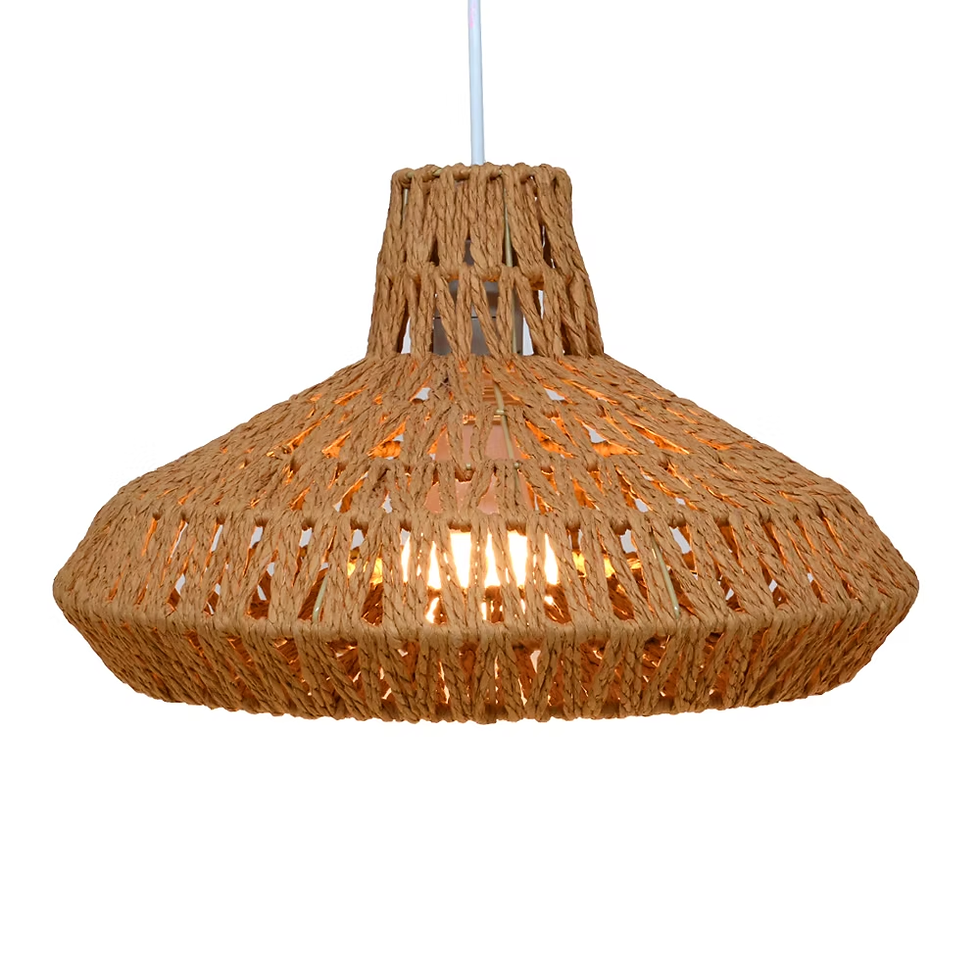
An open woven design keeps the room feeling light and easy. It also reflects a practical idea in this article: open forms usually work better where air needs to move freely.
What to check before finalizing a humid-region woven range
For sourcing or wholesale planning, the material decision should not stop at “natural” versus “synthetic.” The more useful review starts with four plain questions. What room is this for? What goes inside? How wet does the surrounding air stay after use? How often will the item be wiped, moved, or opened? A range built around those questions usually feels much sharper than a range built around look alone.
Construction matters too. Rim stability, handle attachment, base shape, and how the basket sits on a flat surface can tell a lot in a short time. Goldwoven’s inspection standards page describes a standardized QC flow based on AQL and says each order includes inspection reports and photos. Its related basket-quality content also breaks the review into raw material inspection, frame or mould inspection, sample inspection, and bulk inspection. That sequence is useful because it keeps problems small enough to fix while they are still easy to manage.
Customization matters for humid-region lines as well, but only when it serves the room. Goldwoven’s customization page says flexible options can cover size, shape, material, color, labels, and packaging. That is helpful, yet the better use of customization is not endless variation. It is clearer matching. A better lid. A shallower tray. A more breathable side wall. A finish that sits more quietly in the room. Those are the changes that age well.