


goldwoven
Apr 10, 2026
Soft Spring Gift Ideas That Feel Useful, Warm, and Easy to Keep
Spring has a way of making simple things feel generous again. Morning light stays a little longer on the table. Windows open. Linen dries faster. A tray of tea, a folded towel, a candle on a shelf — all of it feels softer. That is exactly why a well-made Gift basket works so well in this season. It does not need to be loud. It does not need a big speech. It only needs the right shape, a believable mood, and enough usefulness to stay in the home long after the ribbon is gone.
A spring basket for mothers should feel like something meant for daily life, not just a holiday photo. That is where woven storage bases quietly do more than ordinary packaging. They bring warmth before anything goes inside. They suggest texture, calm, and routine. Even better, they keep working after the gift is opened. A basket can move to a breakfast table, a linen shelf, a bathroom corner, or beside a reading chair without looking out of place. That lasting use changes the whole feeling of the set.
The strongest spring gift sets usually start there. Not with filler. Not with decoration. With the base. A good basket already carries part of the story. A round handled basket hints at tea by a window or a light brunch. A low rectangular basket feels tidy and domestic, perfect for folded towels or hand cream. A lidded hamper slows the mood down and makes the whole set feel more settled. A covered basket with straps feels private, neat, and close to everyday routines.
That is the real appeal of a Gift basket. It can hold a season without turning into a costume for that season. Spring still shows up, but in a quieter way: a softer silhouette, natural texture, easier styling, and a sense that the basket belongs in a room before it ever becomes a gift.
Why woven storage bases feel right in spring
Spring gifts often fail for one simple reason. They are too decorative to live with. They look charming for a day, then awkward the next week. Printed boxes, glossy cartons, novelty containers — those things can look bright at first, but they do not always settle naturally into a home.
A woven base behaves differently. It softens the arrangement before a single item is added. It picks up daylight in a gentle way. Near a kitchen window, the weave casts a small shadow. On a dresser, the edges feel warm rather than sharp. Beside folded cloth, soap, or tea, the basket looks like it belongs there already.
That visual warmth matters, but the practical side matters more. A spring gift should not feel disposable. Once opened, the base should keep doing something useful. A handled basket can hold fruit or napkins. A rectangular basket can go to a linen shelf. A hamper can hold a throw in the evening. A covered basket can store note cards, charging cables, or small keepsakes on a bedroom bench. In other words, the base becomes part of the home instead of becoming waste.
Spring also asks for a lighter hand. Heavy decoration usually looks wrong in this season. Woven storage helps because the material itself carries enough character. The basket brings texture, shape, and natural color without needing too many extras. That is often the difference between a set that looks thoughtful and one that looks overworked.
A good spring basket starts with a real scene
The best spring basket ideas do not begin with a category name. They begin with a scene.
That scene can be small. A slow breakfast by the window. A bath shelf after a shower. A folded towel on a bench. A reading chair at 8 p.m. A quiet entry table with a candle and note cards. Those tiny domestic moments are what make a basket feel personal. The contents then follow naturally from the scene, and the base shape starts making sense too.
This is where many spring sets go wrong. They collect unrelated pleasant things and hope the basket will somehow unify them. Tea, bath salts, candy, a mug, a notebook, a seed packet — each item may be nice, but together they say almost nothing. A better basket makes a clearer choice. Tea and breakfast. Bath and linen. Reading and rest. Entryway order. Garden lunch. One idea is enough.
Once the scene is clear, the basket becomes easier to judge. A round basket with a high handle belongs to tea, brunch, bread cloths, napkins, or floral accents. A clean rectangular basket belongs to folded items and shelf logic. A covered basket belongs to smaller rituals, stationery, tea, candles, or desk-adjacent things. A lidded hamper belongs to slower, more intimate themes with a little more depth.
That is the useful trick: let the basket shape agree with the mood. When the base and the contents tell the same story, the set feels natural even if the contents are modest.
Morning tea, open windows, and a basket that already feels like spring
One of the strongest spring directions is also one of the simplest. Tea. Not an elaborate “tea collection.” Just the small pleasure of a morning tea scene that feels calm and lived in.
A handled round basket suits this perfectly. The handle adds height without heaviness. The open shape leaves room for a folded napkin, a mug, a small jar of honey, two tea sachets, maybe a spoon wrapped in cloth. One stem or herb sprig is enough. No large bow. No crowded filler. Just the feeling of a spring morning landing softly on a table.
That works because the basket is already doing part of the work. The round body feels relaxed. The handle gives the set a natural silhouette. The open top keeps the mood airy. It looks more like a real domestic object than a package.
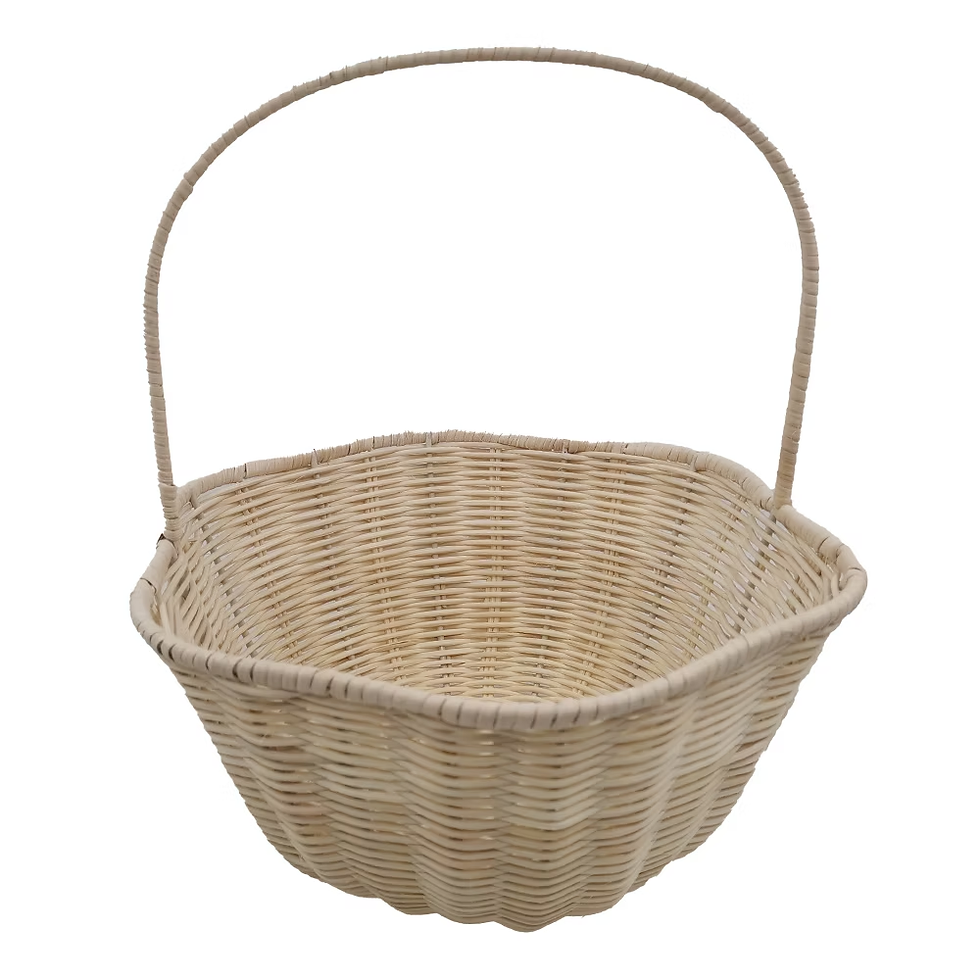
In practical use, this kind of basket stays easy after the gift is opened. It can hold breakfast cloths, bread, fruit, or small table items. That after-use matters. It gives the set a memory that lasts longer than the day itself.
A quiet spring basket often works best when it feels possible. That is the word. Possible. Something that could really sit near a window at 8 a.m. with sun touching the rim of the weave and steam rising from a cup. When a basket creates that kind of image, it has already done its job.
Bath and linen themes work because they fit the season naturally
Spring is full of reset energy. Not dramatic change. Just gentle clearing out. Lighter fabrics. Fresh towels. Open shelves. Soap that smells cleaner somehow. A good spring basket can lean into that feeling without becoming clinical.
This is why bath and linen themes keep working. They are easy to understand, but they do not have to be predictable. The trick is to make them look calm rather than crowded.
A low or medium rectangular basket is usually the best base here. Folded items sit better in straight-sided baskets. Towels stack neatly. Soap bars sit flat. Hand cream, bath salts, or sachets can be placed without wobbling. The whole set feels more ordered from the start.
That order matters because this kind of basket is built around touch. Soft cotton. Dry soap paper. woven texture. Maybe a room spray. Maybe a small card tucked under a folded towel. There is no need to over-style it. A cloth liner or tissue wrap can create enough lift. The basket itself should stay visible.
A linen refresh theme is especially strong in spring because the after-use is obvious. Once the gift items are removed, the basket can hold guest towels, extra washcloths, sachets, or small folded linens. It stays close to the original mood.

Nested rectangular baskets work especially well for this kind of spring set. They feel tidy without feeling stiff. One can hold the contents, while the second extends the story and adds storage value immediately. The visual effect is clean, but not cold.
The strongest bath-and-linen baskets also stay disciplined. One scent family is enough. One accent tone is enough too. White, oatmeal, washed green, pale stone, or soft sand usually feel more convincing than brighter seasonal color. A woven base already brings warmth. Spring only needs a hint.
The best spring themes usually feel domestic, not theatrical
There is a temptation to make Mother’s Day baskets look more dramatic than they need to be. More flowers. More filler. More tags. More little items. It seems generous, but often it just hides the basket and weakens the whole composition.
A more restrained approach almost always wins. Spring is already expressive. It does not need constant reinforcement.
One useful way to think about it is this: a basket should look good half-empty. If the arrangement only works when every inch is filled, the base is not doing enough. A strong woven storage basket carries shape and atmosphere on its own. The products inside should support that, not bury it.
That is also why domestic themes hold up so well. Breakfast, bath, linen care, reading, entryway order, table setting, quiet evening — these are scenes people already understand. The basket feels honest because it fits a real rhythm of life.
A reading-corner basket, for example, can be beautifully simple. A candle. Tea. A bookmark. A folded light throw. Maybe a notebook. It does not need to become a “self-care universe.” It just needs to feel like something that belongs near a chair when daylight has faded and the room has gone quiet.
An entryway basket can be even simpler. A covered basket with a candle, note cards, reusable bags, or a small room spray becomes convincing because the after-use is immediate. It will still make sense on a bench or shelf tomorrow.
Domestic themes do not sound flashy on paper. In a room, though, they feel believable. That matters more.
Why a woven hamper changes the tone of the whole gift
A woven hamper does something open baskets cannot quite do. It adds privacy. It slows the eye down. It makes the gift feel a little more settled before it is even opened.
That makes hampers especially useful for spring themes that lean toward rest, keepsake value, or room-based rituals. A lidded basket suggests that the contents are meant to be discovered, not just displayed. It also feels a little calmer, a little more rooted.
This matters because spring softness can sometimes tip into fragility. A hamper adds weight without adding harshness. The basket still feels warm and woven, but the lid brings structure. That balance can make the whole arrangement feel more substantial.
A hamper also solves practical styling problems. Taller contents can sit lower and cleaner. Tissue can be hidden more easily. Cards or notes can slip under the lid. A throw, candle, tea, and notebook can sit together without fighting for space. The outside stays neat. The inside feels layered.

This type of basket is especially strong for evening themes. Reading. Rest. Bedroom calm. Linen storage. Soft textiles. Those scenes fit the shape naturally. The basket does not have to explain itself.
A small handling detail makes a big difference here: leave breathing room below the lid. A hamper should not be packed right to the edge. That little space makes the basket feel composed and keeps the opening moment smoother. Even in photographs, the difference shows.
Covered baskets feel quieter, closer, and more personal
Open baskets get a lot of attention in spring because they are easy to style and easy to photograph. Covered baskets, though, often carry a different kind of charm. Less showy. More intimate. More like something found at the end of a bed or on a living-room shelf rather than in a display window.
That is exactly why they can work so well for Mother’s Day themes.
A covered rectangular basket with straps feels neat and domestic. It has a sense of care built into it. The contents are not exposed all at once. That small element of privacy changes the mood. It can make a simple set — tea, hand cream, stationery, small cloth items, a candle — feel more personal without making it sentimental.
These baskets are especially strong for “small rituals” themes. A little desk reset. A note-writing corner. A bedside calm set. A tea-and-journal moment. Those are not loud ideas, but they feel close to real life. A spring basket built around small routines often lands better than one built around oversized gestures.
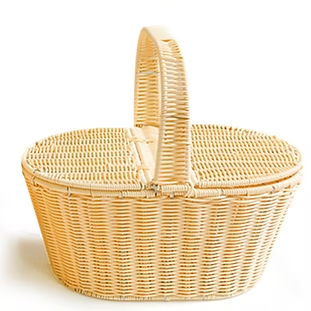
A covered basket also ages well in a room. Once opened, it can store cards, letters, small accessories, or all the little useful things that otherwise drift across a surface. That continued use is part of the emotional value. The basket stays near daily life instead of becoming a memory stored elsewhere.
In spring, that kind of quiet usefulness can be more moving than decoration.
Color, texture, and the small details that make a basket feel human
Good spring styling is usually a matter of editing, not adding. One more ribbon is rarely the answer. One more filler color is rarely the answer either.
Texture should lead. Woven material already gives enough movement to the eye. That is why baskets pair so well with cloth, paper, soap wrapping, or simple ceramic objects. They share a low, tactile language. Nothing feels too shiny. Nothing fights too hard for attention.
Color should stay close to that mood. Honey brown, oat, chalk white, faded green, dusty blush, soft yellow, warm beige — those tones feel spring-like without turning sugary. Bright seasonal color can work in very small amounts, but most spring baskets look stronger when the palette stays grounded.
There is also a case for imperfection. Not mess. Just a little looseness. A folded napkin turned slightly to one side. A stem leaning gently across the edge. A ribbon tied without trying to look mathematically exact. These things make a basket feel touched by a person rather than assembled by a system.
That human quality matters because a spring basket is often judged in a second or two. The eye notices whether it feels stiff or lived in. A little irregularity can make all the difference.
Scent follows the same rule. One scent thread is enough. Lavender and citrus together may work in some cases, but adding candles, soaps, sachets, and room sprays with competing notes can quickly make a basket feel confused. Spring works better when the sensory direction stays simple.
How to build a basket without losing the basket itself
There is a practical formula that helps a lot with spring styling:
one hero item + two support items + one soft layer + one small seasonal touch
That structure prevents clutter. It also gives the basket room to remain visible.
The hero item anchors the story. In a tea basket, it might be a mug. In a bath basket, a folded towel. In a reading basket, a light throw or candle. The support items add function. Tea sachets, soap, a notebook, a small jar, a hand cream. The soft layer is usually a cloth, liner, tissue, or folded napkin. The seasonal touch might be a stem, a tag, a tiny floral detail, or a narrow ribbon.
This works because it creates rhythm without excess. The basket still feels like the base. The contents feel intentional. Nothing has to be forced higher or wider than it wants to sit.
The same logic works across shapes:
A round basket holds a mug, tea, honey, napkin, and one stem beautifully.
A rectangular basket can carry a towel, soap, hand cream, and a tucked card.
A hamper can hold a folded throw, a candle, tea, and a note beneath the lid.
A covered basket suits compact items like stationery, tea, hand cream, and a cloth.
There is a lesson in that. Spring baskets usually improve when the range of objects becomes smaller, not bigger.
Choosing a basket by room is often the easiest method
Sometimes the easiest way to choose the right basket is to forget gifting for a moment and think about rooms instead.
A kitchen or breakfast table wants an open handled basket. Bread cloths, fruit, tea, or a small jar fit that world. The basket will stay useful there later.
A bathroom wants a low rectangular shape. Towels and soaps sit better in straight-sided baskets. The result looks cleaner instantly.
A bedroom or reading corner may want a hamper or covered basket. That extra enclosure feels calmer. The storage use later is also more obvious.
An entry table wants a compact covered basket or a neat rectangular piece. Cards, reusable bags, candles, or small accessories live well there.
A linen closet or guest room wants baskets that can hold folded cloth and still look tidy on a shelf. Nested rectangles are especially good for that because they bring both order and flexibility.
Choosing by room makes the basket easier to imagine, easier to style, and easier to keep after the gift is opened. That is why the method works so well. The basket already has a future.
Small judgment calls that separate a nice basket from a memorable one
A few decisions matter more than people expect.
The first is height. When all the contents rise too far above the rim, the basket loses control. Spring baskets generally look better when the profile stays low and the edge of the weave remains visible.
The second is contrast. Hard items and soft items should balance each other. A mug next to a napkin. A soap bar next to a towel. A notebook beside a cloth liner. Too many hard-edged objects make the basket feel stiff.
The third is visual breathing room. Empty space is not wasted space. It gives the eye somewhere to rest. It also lets the basket material speak.
The fourth is emotional tone. A basket should know what it is trying to feel like. Fresh. Quiet. Warm. Restful. Tidy. Once that tone is clear, choices become easier.
The fifth is after-use. A basket that has nowhere natural to go after gifting often feels less satisfying, even if it looks lovely at first. This is one of the reasons a woven storage base has such lasting strength. It already belongs to home life.