


goldwoven
Mar 21, 2026
How weave, structure, lining, and packing shape wholesale cost decisions for storage baskets
Most wholesale mistakes with woven storage happen at the same moment: the sample looks attractive, so the conversation stays on color, texture, or “style,” while the real cost drivers sit underneath. In water hyacinth basket wholesale, price usually moves because of structure more than decoration. A tighter weave takes more time. A sharper shape is harder to keep consistent. A frame changes labor and packing. A lining adds sewing and fit control. A multi-piece set looks easy in a photo, but it can become much harder to coordinate once production starts.
That is also why waterhyacinth basket styles keep showing up in storage lines. The material already looks warm and practical, so it does not need much added decoration to feel finished. On Goldwoven’s site, it appears across Home Storage, Laundry Basket, and Bath Storage, which points to its strongest role: everyday storage rather than one-off novelty. That makes it easier to discuss the category in terms of structure, assortment, and repeatability rather than surface styling alone.
Why water hyacinth works well in storage lines
Water hyacinth has a practical advantage that shows up quickly on a shelf. It softens a display without making it look fragile. A plastic bin can solve clutter. A woven basket can solve clutter and still look at home in an open shelf, guest bathroom, laundry corner, or entry bench. That range matters in wholesale. One material can support several categories without making the assortment feel scattered.
It also moves across room types better than many buyers expect. Living room storage benefits from texture. Bathroom storage often needs warmth against tile and ceramic. Laundry needs shape and function, but not necessarily a cold industrial look. Water hyacinth works across all three, which is why it makes sense as a storage category rather than as a narrow decorative item.
Still, that flexibility can create another problem: too many types get added too fast. Once the line starts chasing every possible room and every possible shape, the range loses focus. A better approach is tighter. Start with storage forms that already have clear use: shelf storage, laundry, bath coordination. Then add one accent if it earns its place.
What really drives water hyacinth basket wholesale price factors
When buyers compare water hyacinth basket wholesale price factors, decoration often gets too much attention simply because it is visible. In practice, the bigger cost shifts usually start with build.
Weave density
Weave density is one of the clearest cost drivers. A looser weave can still look attractive, especially in casual open baskets. But once the basket needs a cleaner profile, a tighter weave usually follows. That means more handwork, more correction, and less room for inconsistency. The difference shows up around rims, corners, handle cuts, and base edges.
A tight weave is not automatically the best wholesale decision. It is only worth the extra work when the product needs more shape control or a cleaner retail finish. For an open throw basket, a relaxed weave may already do the job. For a shelf cube or a lined bathroom piece, the tighter construction may matter much more.
Shape precision
Shape precision adds cost quietly. Round baskets can hide small variation. Squares and rectangles cannot. The cleaner the line, the more visible the errors become. A shelf basket that leans, bows, or sits unevenly can lose value in seconds, even if the material itself looks good.
This is why storage cubes, shelf bins, and lidded forms often need more careful work than people expect. Straight edges and balanced corners can make a product look simple, but they rarely make it easier to produce.
Frame and support
Support changes both the build and the freight conversation. A simple open basket can stay lighter in labor and easier in packing. Add a metal frame, reinforcement board, built-up rim, or stronger internal support, and the basket becomes more structured but also more expensive to make and ship.
That trade-off can be worth it. Laundry is the clearest example. A taller basket with a weak top line often looks tired too quickly. A supported form holds its shape better and usually reads as more useful in the room. Support is worth paying for when it solves a visible weakness. If the basket already works without it, extra structure may only add cost.
Lining
Lining is another area where people underestimate cost. A fabric liner sounds small. In practice, it adds cutting, sewing, fitting, edge treatment, and consistency checks. If the liner folds over the rim, then fit matters even more. If it is removable, that changes the construction again.
Lining can absolutely be worth it. In a bathroom set, for example, it often helps the baskets feel cleaner and more coordinated. But a liner should not be treated like a cheap visual upgrade. It changes the product.
Set composition
Single baskets are easier to control than sets. A set looks elegant in a catalog because it suggests order. It also raises the workload. Sizes need to relate well. Nesting has to make sense. Trims and proportions need to feel consistent. One weak piece can make the whole set feel off.
A three-piece bath program, a shelf trio, or a towel-and-toiletry set can be very effective. It just needs to be priced and sampled as a coordinated group, not as several loose items thrown together.
Packing efficiency
Packing is where a lot of otherwise good products become expensive. Deep rigid bodies take space. Large handles interrupt nesting. Lids can create awkward dead volume. Reinforced forms protect shape, but they also reduce carton efficiency. Folding structures can help a lot, though only when they reopen well and still look tidy.
That is why packing should be discussed before the assortment gets too wide. If a basket is hard to stack, hard to nest, and hard to ship, it becomes expensive long before the invoice is reviewed.
Cost differences by product type
Cost becomes much easier to judge when different water hyacinth storage types are compared by the jobs they actually solve.
A shelf basket or folding cube usually depends on shape discipline. Buyers comparing shelf-friendly formats can also review Goldwoven’s waterhyacinth basket home storage guide for a broader look at practical storage uses.It needs clearer corners, a flatter base, and a cleaner top edge because it will sit inside an open shelving system where every angle is visible. Decorative weave can be added, but it only works when the structure underneath stays sharp. Goldwoven’s folding water hyacinth storage cube is a good example of that balance. It uses a cube form that fits shelf storage naturally, while the woven surface still gives it warmth and visual detail.

Laundry works differently. The basket often needs more vertical presence and more support. An open soft basket may look nice, but once it has to stand taller and handle daily use, structure becomes more important. Goldwoven’s metal-framed water hyacinth laundry basket shows why support adds cost in a sensible way here. The frame gives the body a cleaner silhouette and keeps the function obvious. That is useful structure, not decorative complication.

Bathroom sets add another layer: coordination. A single basket can get away with a few quirks. A set cannot. Once multiple sizes sit together, the trim, weave, scale, and lining all need to feel related. Goldwoven’s bathroom storage set is useful here because it shows the kind of product where lining and set composition actually matter. In a guest bath or linen setup, that cleaner finish can justify the extra work.

Accent pieces can still play a role in wholesale, but they should stay secondary to core storage forms. Goldwoven’s rainbow basket shows how a softer decorative item can add variety to the line, but it should still be evaluated through the same pricing lens as other products. If the added shape, color treatment, or construction detail does not create enough value for the assortment, the piece may increase complexity more than it improves the range.
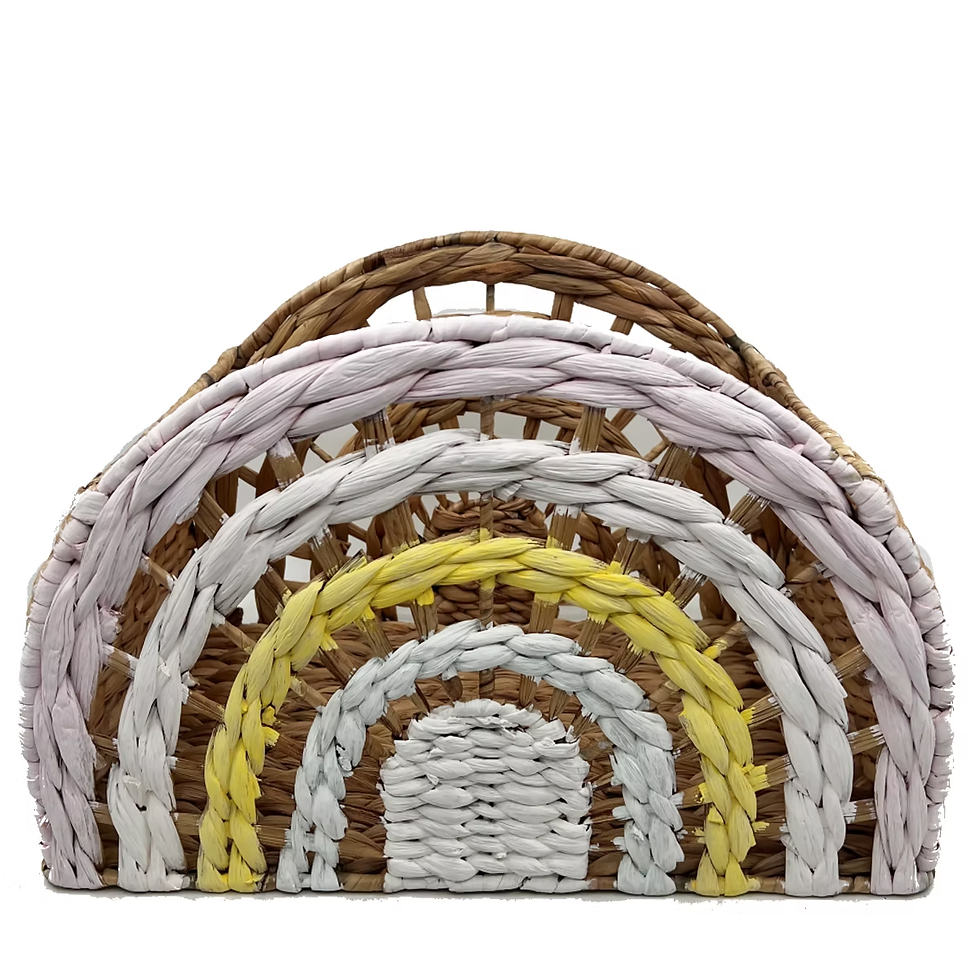
These differences matter because cost comparisons often mix together products that are solving very different jobs. A simple open shelf basket should not be judged against a supported laundry form. A lined set should not be priced like a one-piece cube. Product type tells part of the cost story before the basket is even touched.
How room use changes build cost
Room context is useful only when it helps explain build. Otherwise it becomes filler.
Shelf storage needs cleaner geometry. That is why folding cubes and structured bins often cost more than soft open baskets. They sit in visible systems, so the edges have to behave. The Home Storage category is the clearest place to see that kind of product logic because the shapes there are built for shelves, cabinets, and everyday sorting rather than decorative one-off use.
Laundry is where support earns its keep. A taller body that holds its line feels useful immediately. A basket that collapses into itself after a few uses rarely does. That is also why the Laundry Basket category is important in cost planning: it shows forms where structure and handling matter more than surface decoration.
Bathroom storage is where lining and set composition become easier to justify. Towels, guest items, and small accessories usually look better in coordinated forms than in random loose baskets. The Bath Storage category makes that clear. It is not just “small baskets for the bathroom.” It is a category where finish and consistency affect how polished the whole group feels.
What to look at during sample review
A sample review is where cost and value stop sounding theoretical. It is also where many teams waste time by commenting on the wrong things first.
Start with the base. Put the basket down on a flat surface. If it rocks, the problem is already bigger than appearance. Then look at the rim. A shelf bin or lined set should not have a wandering top line. On a cube, the corners should feel deliberate. On a laundry basket, the structure should still read clearly even when the piece is empty.
Next, check the touch points. Handles should feel secure and comfortable. Lining should sit neatly, not twist or drag. If it is a set, compare the pieces side by side. Do they really look like they belong together, or do they only share a material?
Then move to use. Fold and reopen a cube. Lift a laundry basket. Place folded towels into a bathroom set. Small actions show a lot. A basket that looks fine in one position may feel awkward after ten seconds of handling.
Packing should be reviewed at the same time, not at the end. Can the pieces nest well? Do the handles waste space? Does the structure justify the freight volume? This matters even more in multi-piece programs.
It also helps to separate the review into stages. A first sample should answer whether the product idea is worth keeping at all. A revised sample should show whether the main corrections actually landed. A repeat-order reference sample should be stable enough to guide later production. When those stages get mixed together, teams often spend too much time polishing products that should have been simplified or removed earlier.
Goldwoven’s Inspection Standards page notes the use of standard QC procedures and international AQL inspection standards, along with inspection photos and reports for each order. That is useful because woven storage should be reviewed with clear checkpoints, not vague comments like “looks a bit off.”
A short sample review for water hyacinth basket wholesale should usually cover:
flat base
clean rim
even shape
secure handles
lining fit
lid fit, if relevant
consistency across a set
nesting or folding performance
packing efficiency
This is also the stage where near-duplicate products should start getting removed. If three samples differ only slightly in width, rim treatment, or corner shape, they are often still one product being decided rather than three real products. Cutting those near-duplicates early saves revision time and keeps the final assortment easier to price, present, and reorder.
Where cost gets added without adding enough value
Some added costs solve real problems. Others simply make the line heavier without making it better.
One common mistake is over-decorating the line. Water hyacinth already has texture. Once a basket adds bold trim, extra color, a liner, unusual handles, and a special silhouette all at once, the product can look busy and the cost climbs fast. Most of the time, one stronger detail is enough.
Another mistake is widening the assortment too early. A line starts with a good shelf basket, a laundry option, and a bath set. Then four more “almost the same” forms get added. The range feels larger, but not stronger. Repetition of similar shapes often increases cost without making the collection easier to sell or easier to present. If those versions do not clearly separate by use, they are usually not multiple products yet. They are still one product being decided.
Oversized forms can cause trouble too. Bigger looks impressive in a product list, yet large baskets are harder to shape, harder to handle, and harder to ship. If the extra size does not solve a real use case, it becomes a weak upgrade.
The same goes for lining. A liner can elevate the right product, especially in bath storage. But once lining starts appearing on every piece in the assortment, the line can become more expensive without feeling more considered.
A simple rule helps here: if a feature does not improve use, structure, or visual clarity, it usually should not raise the cost.
A better first assortment
The strongest first assortment is usually narrower than buyers expect. It does not need many ideas. It needs a few shapes that do clearly different jobs well.
A good starting point is:
one shelf or cube storage form
one medium open storage basket
one structured laundry basket
one coordinated bath set
That is enough to cover the main categories without making the collection hard to manage. It also helps with sampling. Each product plays a different role, so the review becomes clearer. Shelf products get judged on shape. Laundry gets judged on support. Bath sets get judged on lining and coordination.
Goldwoven’s category structure already points in that direction. Home storage covers the shelf side, laundry shows where support matters, and bath storage gives room for lined and coordinated forms. For a first planning pass, that kind of category split is much more useful than building an assortment around trend words.
One related read worth linking here is Goldwoven’s home storage guide, because it stays grounded in real storage use rather than broad style claims.
Short Buyer Checklist
The assortment covers shelf storage, laundry, and bath before adding accents
Each basket has one clear job
Shelf forms have clean corners and flat bases
Laundry forms have enough support to keep shape
Lined products appear only where the extra finish clearly improves the result
Sets look coordinated across all pieces
Similar shapes are not repeated without reason
Packing efficiency has been reviewed early
Sample comments are specific and visual
Reference notes are clear enough to support later quote and QC discussion, whether internally or through direct follow-up via the contact page.
FAQ
Which factors affect water hyacinth basket wholesale cost the most?
The main drivers are weave density, shape precision, frame or internal support, lining, set composition, and packing efficiency. Decoration matters less than people often assume. A simple-looking basket with a sharper shape can cost more than a looser decorative basket because tighter structure usually requires more control.
Is a tighter weave always better for water hyacinth basket wholesale?
No. A tighter weave is worth paying for when the product needs shape control, a cleaner finish, or a more refined look on open shelves. For softer baskets, a relaxed weave may already be enough. The best choice depends on the product job, not on the idea that “tighter” automatically means “better.”
When is a lined bathroom set worth adding?
It makes sense when the line needs a cleaner, more coordinated finish. Lining usually works best in bathroom and guest-storage products where the baskets sit close to towels, toiletries, or linen. It adds cost, so it should be used where that extra finish is visible and useful.
What should a sample review focus on first?
Start with the base, rim, and overall shape. Then check handles, lining fit, lid fit if there is one, and how the basket behaves in simple use. Packing should be reviewed at the same time. Goldwoven’s inspection page is a useful reference because it frames QC in clear checkpoints and AQL-based review rather than vague impressions.
How many types should go into a first assortment?
Usually fewer than expected. A shelf form, an open storage basket, a laundry form, and a bath set can already make a strong start.Too many similar types often add cost and confusion without improving the line.
Structure should lead the decision, not decoration. A tighter assortment with clear product roles usually performs better than a wide one full of overlapping ideas. When shelf storage, laundry, and bath functions are separated clearly, pricing becomes easier to judge because each added feature has a visible job. That also makes the line easier to sample, easier to review, and easier to repeat.For buyers who want to discuss specifications, sampling, or QC expectations in more detail, it also makes sense to contact the team directly.