


goldwoven
Jul 4, 2026
Explore wicker laundry baskets for hotels, bathrooms and retail programs, with guidance on materials, sizing, handles, liners and wholesale planning.
A hotel bathroom can look calm at check-in and untidy by the next morning. Towels collect near the shower, clothing rests beside the wardrobe, and one loose pile changes the whole room.
Well-planned wicker laundry baskets give those textiles a clear place. At the same time, woven surfaces soften tile, glass, painted furniture, and metal fittings.
The same product category also serves spas, serviced apartments, bathroom collections, and retail storage programs. However, each setting needs a different balance of privacy, access, capacity, and movement.
For that reason, the strongest selection starts with the room routine. Once placement and contents are clear, shape, material, handles, liners, and lids become easier to compare.
Why Wicker Works in Visible Storage Areas
Laundry storage often remains visible. A basket may stand beside a vanity, wardrobe, towel cabinet, or retail display. Therefore, it affects the room even when empty.
Woven texture adds warmth without introducing a loud color. Natural tan works with white towels, pale timber, stone, and neutral fabrics. Darker edging can also connect with black fixtures or deeper cabinetry.
A basket communicates its use through shape. Tall sides suggest laundry. A lid suggests concealment, while high handles suggest carrying and frequent movement.
Meanwhile, a low rectangular basket suggests folded linen or shelf storage. These visual cues help a product make sense quickly in a hotel room or retail photograph.
Wicker Is a Weaving Method
The term wicker describes woven construction rather than one material. A wicker-style basket may use seagrass, water hyacinth, banana leaf, natural rattan, paper rope, willow-style strands, or PP rattan.
Each material creates a different surface and structure. Natural fibers bring visible tonal movement. By contrast, PP rattan can support straighter sides and more controlled colors.
Material should follow the use scene. A dry bedroom allows more freedom than a humid bathroom. Likewise, a retail feature piece may use stronger texture than a quiet hotel-room hamper.
Hotel Laundry Baskets for Guest Rooms and Suites
Hotel storage needs to support routine use while preserving visual order. Clothing and towels can make a compact room feel crowded within hours.
A lidded hamper usually creates the calmest result. Once the top closes, mixed textiles disappear and the basket reads as a complete interior object.
However, the footprint matters just as much as the lid. Rectangular forms fit neatly beside walls and wardrobes. Round baskets feel softer but often use more surrounding floor space.
Plan a Permanent Position
A laundry basket performs better when the room provides one obvious location. Near a wardrobe, it supports clothing storage. Beside the bathroom entrance, it can receive both garments and towels.
A simple floor plan should show nearby doors, drawers, luggage benches, and shelves. Even a small clearance issue can make daily use awkward.
Tall baskets use vertical space efficiently. Still, the opening should remain accessible, and smaller items should not disappear into an overly deep body.
Suites may need more capacity, although maximum volume is not always helpful. A full oversized hamper can become difficult to move. Medium-capacity forms often support a better housekeeping routine.
Use Supporting Baskets for Folded Linen
Not every hotel storage piece needs to be a full-height hamper. Low woven baskets work well on open shelves, dressing benches, and bathroom cabinets.
Straight sides keep folded towels aligned. Meanwhile, integrated grips make repositioning easier during room setup and cleaning.
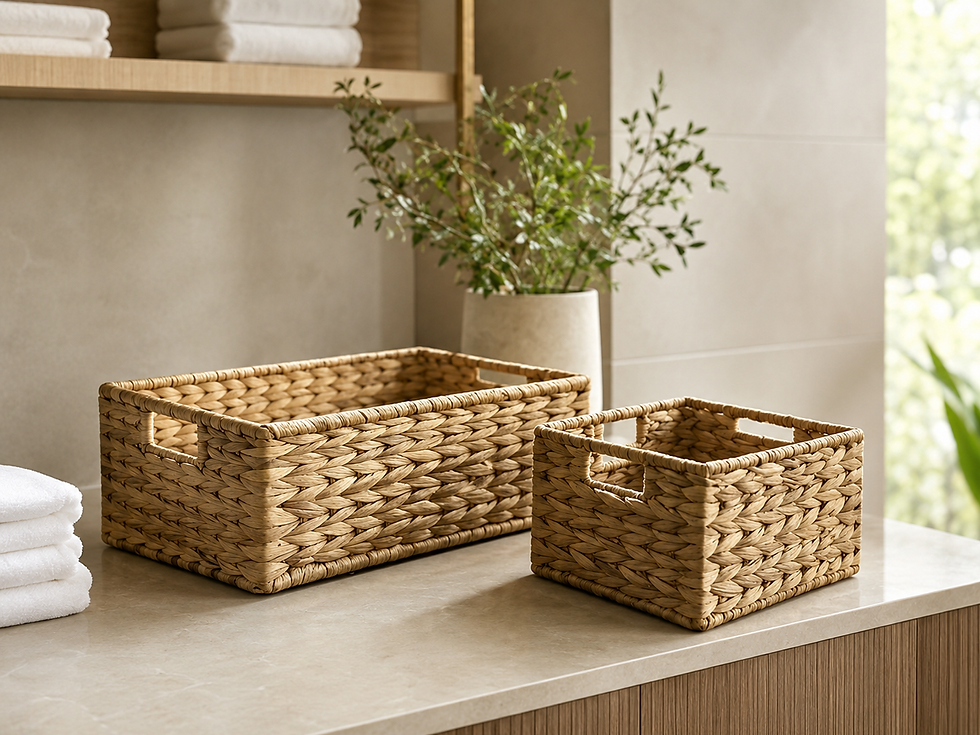
GoldWoven’s low seagrass basket has a shallow rectangular profile, cutout handles, and a listed size of 43 × 30 × 15 cm. Its form suits folded towels, shelf storage, and supporting hotel-linen programs.
Liner and Lid Details
A removable liner can simplify textile movement. The woven shell stays in place, while the fabric section lifts out for laundry handling.
The liner should follow the basket shape closely. Excess fabric collapses inward, while a tight liner pulls against the rim.
Lid operation also needs practical testing. Hinged lids require rear clearance. Lift-off lids need a nearby place during emptying.
A clean rim, stable lid, and simple grip usually work better than decorative hardware. These details receive repeated use and should feel natural from the first day.
Open Baskets for Spas and Wellness Areas
Spa areas follow a faster routine than guest rooms. Towels, robes, and treatment linen move several times during one shift.
Open baskets support quick access. Nothing needs to be lifted before a towel goes in or out. The visible contents also make replenishment easier.
A broad opening matters here. Folded textiles should pass through the rim without catching, while the upper edge should remain smooth.
Handles Need to Work Under Load
An empty basket reveals little about carrying comfort. Real towels add weight and show whether the handle position feels balanced.
High loop handles make the carrying role obvious. Rope handles create a softer resort look, while cutout grips keep the outline compact.
However, every attachment point needs a practical structure. Decorative handles that twist or pull unevenly can slow routine movement.
The water hyacinth basket below uses an open body and rope handles. The visible natural texture and upright form make it suitable for dry towels, robes, blankets, and spa-side textile storage.
Separate Clean and Used Textiles
A spa program may use related baskets for several functions. However, clean and used textiles should remain easy to distinguish.
Position can provide the first signal. Fresh towels may sit on a raised shelf, while used textiles go into a deeper floor basket.
Liner color can add another cue. A pale fabric may support fresh towels, while a darker or labelled liner marks collection storage.
Shape can reinforce the difference. Low open baskets suggest display and access. Deeper forms suggest gathering and movement.
Bathroom Laundry Baskets and Moisture
Bathrooms combine limited space, hard floors, steam, and frequent textile use. Therefore, placement matters before material or color.
A basket beside a dry vanity has different needs from one near a shower. Marking the proposed footprint on the floor can reveal door, drawer, and walking-path conflicts early.
Rectangular baskets often fit narrow walls more efficiently. Round forms soften corners, although they usually need more space around the body.
Keep Woven Storage Away From Standing Water
Damp towels should not remain tightly packed for long periods. This is especially important with closed natural-fiber baskets.
The U.S. Environmental Protection Agency emphasizes ventilation, moisture control, and prompt drying in its guide to mold and moisture. The same principle supports better basket placement: choose a dry, ventilated corner away from direct spray and standing water.
An open basket can support faster access in an active bathroom. A lid, however, may provide the cleaner appearance required in a guest-facing room.
The routine should decide the format. A basket emptied daily can follow a different direction from one used for several days.
Check the Base on Hard Flooring
Tile makes an uneven base easy to notice. A slight rocking movement often becomes more obvious after the basket fills.
Samples should be tested on a hard, level surface with realistic contents. Protective feet can raise the lower weave from minor splashes, but each foot must remain even.
An internal bottom panel may also improve stability. It spreads the load and helps prevent sagging.
For coordinated bathrooms, one main hamper can be paired with smaller pieces from the home storage basket collection. This creates a consistent room story without repeating the same shape.
Retail Laundry Basket Programs
A retail range can contain many attractive baskets and still feel difficult to understand. The usual problem is product overlap.
Several medium open baskets may share the same height, handles, and purpose. Small weave differences do not create a clear role.
A stronger program begins with use scenes. Concealed laundry, towel movement, compact storage, linen display, and supporting organization are separate functions.
Build the Range Around Clear Shapes
A focused program can begin with four forms:
A tall or lidded hamper for bedrooms and bathrooms.
An open handled basket for laundry movement.
A narrow form for compact floor areas.
A low rectangular basket for towels or shelf storage.
Each silhouette should remain recognizable from several metres away. Color can support the distinction, but it should not carry the entire product story.
Four clear roles usually create a stronger assortment than eight similar products. The range becomes easier to photograph, describe, display, and replenish.
Add Supporting Pieces Without Repeating the Hamper
Smaller woven baskets can extend the laundry category into bathroom accessories, linen storage, and hotel amenities.
A stronger texture can work as an accent beside a calmer main hamper. Meanwhile, a rectangular shape keeps small items grouped and easy to display.
GoldWoven lists the banana-leaf basket with a 33 × 23 × 15 cm rectangular body and a chunky checkered weave. Its scale is better suited to hand towels, packaged bathroom products, guest amenities, and supporting retail displays than full laundry loads.
Nested Sets Support Several Storage Levels
A nested set can add several storage sizes without introducing unrelated materials. The larger piece may hold folded linen, while the smaller format organizes amenities or bathroom accessories.
Nesting can also reduce storage space between displays or seasonal resets. However, the fit should not crush decorative panels or damage the rims.
GoldWoven describes its two-piece rectangular rattan set as stackable and suitable for hospitality, bathroom organization, retail display, and small textile storage.
Material, Liner, Handle, and Lid Choices
Material influences appearance, handling, consistency, and room suitability. Therefore, it should follow the intended use rather than a general style preference.
Natural Fibers
Seagrass creates a lighter, relaxed surface. It works well with white towels, pale timber, and coastal or resort-style interiors.
Water hyacinth produces a thicker texture. It suits open baskets, feature storage, and warm natural programs.
Banana leaf creates stronger visual character. Its fuller weave works well for supporting pieces and display accents.
Natural rattan can support framed structures and decorative open patterns. In every case, dry indoor placement helps maintain the intended appearance.
PP Rattan and Structured Weaves
PP rattan can support straighter silhouettes, fitted lids, and more controlled color. It often suits modern bathrooms and repeat hospitality programs.
The finishing still needs close review. Ends should remain covered, rims should feel smooth, and internal frames should not press through the weave.
Liners
A liner protects textiles from rough strands and can simplify movement. Removable versions allow the woven shell to remain in position.
Fabric should fit without sagging. Neutral cream, beige, and pale grey usually work across several material colors.
Handles
Cutout grips create a compact outline. Rope handles add a softer natural detail, while high loops communicate carrying clearly.
The handle should be tested with realistic weight. Position, opening size, and attachment strength affect comfort more than appearance alone.
Lids
Lids hide mixed laundry and create a calmer upper line. Hinged options remain attached, while lift-off tops keep the silhouette simple.
Room clearance should guide the mechanism. A lid that hits a wall or shelf will quickly become inconvenient.
Wholesale Ordering Checklist
A clear specification helps keep product development focused. The following points cover the most important decisions.
Use and Placement
Define the room and exact basket position.
Record the main contents.
Check exposure to steam, splashes, or standing water.
Confirm how often the basket will move or empty.
Decide whether the contents require concealment or quick access.
Size and Shape
Measure available width, depth, and height.
Check nearby doors, drawers, and shelves.
Confirm that folded towels fit through the opening.
Test whether smaller items remain easy to reach.
Match capacity to the emptying routine.
Construction
Select the material and acceptable color range.
Confirm fixed or removable lining.
Test handles with realistic weight.
Check lid alignment and opening clearance.
Review the rim, base panel, and floor stability.
Retail and Packing
Show the full silhouette in the main product image.
Include open, closed, handle, and liner views where relevant.
Confirm whether baskets can nest without damage.
Protect rims, handles, lids, and decorative panels.
Record approved samples, dimensions, labels, and packing details.
For a broader assortment, the wholesale woven basket range can help connect laundry storage with supporting bathroom and home-organization formats.
FAQ
Related Reading
Plan the Next Laundry Basket Program
A strong program begins with a real room and a clear routine. Placement, textile type, movement frequency, moisture exposure, and opening style should guide every later decision.
For hotel rooms, covered storage often creates the calmest result. Spa areas benefit from open access and comfortable handles. Meanwhile, retail programs need distinct shapes and supporting storage pieces.
Three practical actions can move the project forward:
Compare wicker laundry baskets by scene, shape, material, and opening style.
Prepare one specification covering dimensions, liners, handles, labels, and packing.
Discuss tailored sizes, materials, colors, or packaging through custom basket development.