


goldwoven
Apr 9, 2026
Practical storage ideas, gift inspiration, and easy tips for choosing the right woven basket for everyday spaces.
A Woven basket often comes into a home for one simple reason: something needs a place to go. A blanket needs to leave the sofa arm. Keys need to stop wandering across the entry table. A small gift set needs to feel warm and complete instead of overpacked. Yet the reason woven baskets stay popular goes beyond storage. They make a room feel softer, calmer, and more lived in. They bring order, but they do it gently.
That is why people rarely search for baskets in only one way. A search may begin with “storage basket for shelf,” then turn into questions about styling, handles, lids, or gift presentation. Another may begin with “gift basket ideas,” then quietly become a search for something reusable after the ribbon is gone. In real life, those needs are connected. A basket that looks beautiful but feels awkward in daily use will not stay in the room for long. A basket that is practical but cold will not always feel right in a home. The best choices usually sit in the middle.
This guide is built around that middle ground. It looks at how a woven basket works in ordinary spaces, how to judge what shape or depth makes sense, how to use a basket without making a room feel busier, and how storage and gifting often overlap more than people expect.
Why a woven basket changes more than storage
One of the quiet strengths of a woven basket is that it solves visual clutter without making the room feel strict. Plastic bins can be useful, but they often look like a temporary fix. Fabric bins can soften a room, but some lose shape too easily. A woven basket sits somewhere more balanced. It has texture, structure, and a calm presence.
That matters in everyday spaces. In a living room, a basket beside the sofa does not just hold a throw. It gives the room a place to breathe. In an entryway, it does not only catch sunglasses and receipts. It stops the surface from turning into a row of little forgotten things. In a bedroom, it can keep extra textiles close at hand without making the room feel like a storage closet.
The feeling is subtle, but it is real. Rooms usually look better when they have fewer loose objects and fewer tiny storage pieces fighting for attention. One well-chosen basket can do what three smaller containers cannot. It creates one calm zone instead of several little stops for the eye.
The same is true in gifting. A basket does not only hold products. It shapes how those products are seen. A good basket makes a small tea set feel thoughtful, a self-care assortment feel softer, and a holiday arrangement feel complete before a single word is spoken. That is why basket shopping so often sits between utility and emotion. The best basket is rarely the one with the most features. It is the one that feels right in the room and useful after the moment has passed.
Open or covered: the first decision that matters
Most basket choices get easier once this question is answered: should the contents stay visible or disappear?
Open baskets are best when the contents already look naturally tidy. Folded throws, rolled hand towels, neatly stacked napkins, a few magazines, or grouped pantry items can sit in the open without making a room feel messy. In these cases, a lid only slows things down. The basket is there to make daily use easier, so open access helps.
Covered baskets solve a different problem. They are for the objects that refuse to look beautiful together. Chargers, remote controls, batteries, medicine boxes, grooming tools, travel adapters, cables, receipts, and other small items usually create visual noise very quickly. A lid hides that noise and instantly lowers the stress level of a shelf or tabletop.
This is also where daily habit matters. A basket in a fast-moving room should feel easy. In an entryway, a deep lidded basket may be too slow. In a bedroom or cabinet shelf, that same basket may feel perfect. The question is not whether a lid is better. The question is whether the room is asking for quick access or visual calm.
A good rule is simple:
use open baskets for soft, larger, or already tidy items
use covered baskets for small mixed items and visual reset
That one shift makes most basket decisions much clearer.
How to tell whether a basket is truly useful
A basket may look lovely in a product image and still be wrong for daily life. The most useful basket is usually the one that removes a small frustration from the room. That is the test worth using.
Shape
Straight sides usually work better on shelves. They follow the lines of bookcases, cubes, cabinets, and sideboards, so they waste less room. A square or rectangular basket also looks cleaner when placed in rows or pairs.
Rounder shapes work differently. They soften corners and relax a room visually. They are often a natural fit beside sofas, armchairs, beds, and benches where the basket is part storage and part atmosphere.
Depth
Shallow baskets work well for things that need to stay visible and easy to reach. Think mail, table napkins, pantry packets, tea, keys, or guest towels.
Deeper baskets are better for soft overflow and mixed storage. They hold larger volumes and make rooms feel more settled, but they are only helpful when digging through them does not become annoying.
Handles
Handles seem like a small detail until the basket needs to move every day. In entryways, living rooms, and children’s spaces, comfortable handles matter more than decorative ones. The basket should feel natural to lift, shift, and put back down. If the handle only looks good in photos, it will not win in ordinary use.
Texture and tone
A basket also has to belong to the room. Light woven tones often brighten small spaces and feel easy in entryways, bathrooms, and airy living rooms. Darker tones can ground a room and work beautifully beside wood furniture, neutral textiles, or deeper wall colors. Neither is better. It depends on whether the room needs lifting or anchoring.
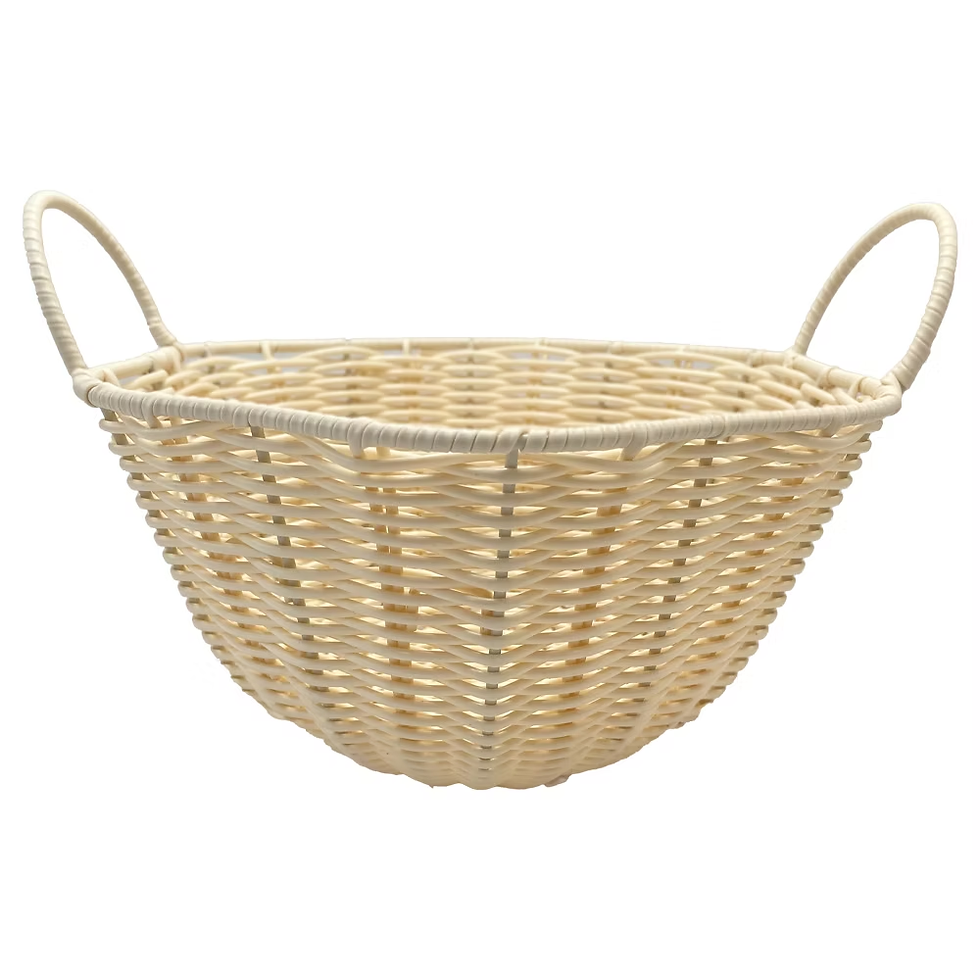
Cream White PP Rattan Storage Basket with Ear-Shaped Handles feels especially natural in an entryway, on an open shelf, or beside a sofa where daily essentials need an easy, tidy home.
The best places to use woven baskets at home
A woven basket becomes easier to choose when the room comes first. Instead of asking which basket looks good, it helps to ask which room needs help and what kind of help it needs.
Living room
The living room basket is usually at its best when it is quiet. It should not feel like a decorative performance. It should feel like something the room had been missing.
A medium open basket beside the sofa can hold a throw, a magazine, and a book without looking busy. A basket under a console can collect extra cushions or soft textiles. On a shelf, a woven basket can break up the harder lines of books, ceramics, and frames.
The mistake here is often buying too many small baskets. Several tiny baskets may sound organized, but they can make the room feel more fragmented. One medium basket often does more. It creates one clear resting point.
Entryway
The entryway is where basket logic gets very practical. This is the place for fast clutter: keys, lip balm, folded umbrellas, gloves, receipts, sunglasses, hand cream, and whatever came home that day.
That is why a basket here should usually be open, medium-sized, and easy to move. A deep basket can become a hole where important small items disappear. A shallow or medium basket keeps the top layer visible and stops the surface from looking restless.
The best entryway baskets feel almost invisible in use. Things land there naturally. Nothing has to be overthought.
Shelves and bookcases
Shelves ask for clean lines. Straight-sided woven baskets work especially well here because they sit neatly beside books, boxes, and folded items. They also help a shelf feel complete without turning it into a display project.
Shelf baskets are useful for paper goods, stationery, beauty products, spare cords, folded scarves, pantry items, and all the small groups of things that do not belong loose on a shelf.
The most important tip is to leave a little space around the basket. If it fits too tightly, pulling it out becomes irritating. A small margin makes a big difference.

Square Natural Look Rattan Organizer for Home Shelving is the kind of basket that works beautifully in bookcases, cube storage, cabinets, and sideboards where clean edges make the whole shelf feel calmer.
Bedroom
A bedroom basket should feel soft, not overly functional. The room already needs to rest. A basket that looks too utilitarian can disrupt that feeling.
This is why bedroom baskets often work best in medium sizes and calm tones. They are perfect for extra blankets, a robe, seasonal pillow covers, or the books that somehow keep gathering beside the bed. One woven basket in the corner can make the room feel more settled without asking for attention.
Oversized baskets can easily look heavy in bedrooms, especially in smaller spaces. One moderate basket, used well, often feels better than one large basket stuffed into a corner.
Kitchen and dining areas
Kitchen baskets are most useful when they group rather than dump. A basket can hold napkins, tea, fruit, condiments, wrapped snacks, or table odds and ends, but it should still feel intentional.
A low basket on a countertop can make breakfast supplies feel more orderly. A basket in a pantry can gather packets and small boxes that would otherwise lean and slide. A woven caddy on a dining table can hold table items while keeping the surface warm and unfussy.
The useful question is not “can this basket hold more?” It is “does this basket make the space easier to reset at the end of the day?”
How to use a woven basket without making the room feel busier
Buying a basket is easy. Using it well is where the real difference happens.
Group similar things together
One of the quickest ways to make a basket fail is to mix too many unrelated objects. A basket for remotes, cables, pens, receipts, and medicine might sound efficient, but in practice it becomes a miniature junk drawer. Baskets work best when they have a clear identity.
One basket for throws. One for letters. One for bath essentials. One for tea and napkins. Once the eye understands the basket in one glance, the basket becomes useful instead of confusing.
Leave breathing room
An overfilled basket stops looking calm. It also becomes harder to use. When items are crammed to the top, every interaction feels like compression instead of access.
A little visible space at the top makes a basket feel lighter and more deliberate. This matters even more in open storage, where the basket is doing visual work as well as practical work.
Match the basket to the speed of the room
Fast rooms need simple baskets. Entryways, busy living rooms, countertops, and bathrooms usually want open access and easy shapes.
Slower rooms can handle more structure. Bedroom corners, curated shelves, guest spaces, and gift arrangements can be a little more refined because they are not being used at full speed all day.
This is one of the best judgment tools for basket shopping: the faster the room, the simpler the basket should be.
Avoid making every basket decorative
Not every basket needs ribbon, styling objects, or a carefully arranged display. Some baskets should simply work. In fact, rooms usually feel more natural when only one or two baskets carry a decorative role and the rest stay quiet.
A woven basket already has texture. It does not need too much help.

Hand-woven Dark Brown Paper Rope Storage Bin with Built-in Handles brings a warmer, more grounded feeling to bedroom corners, sideboards, and blanket storage while still staying easy to use.
When a storage basket becomes a gift basket
This is where things get more interesting. A good gift basket is not separate from good home storage. In many cases, the most appealing gift basket is simply a beautiful basket that still has a life after the gift is opened.
That after-use value matters. A handled basket that later moves to a shelf, dresser, countertop, or bathroom feels thoughtful in a way that disposable packaging never can. It says the gift was designed to stay in the home a little longer.
The first thing that makes a gift basket feel good is structure. Products should sit naturally, not lean or fight for space. The basket should give the arrangement a frame. The second thing is mood. A gift basket should feel warm and complete, not overfilled. A little breathing room is often more elegant than trying to fit too much inside.
Handled baskets are especially useful here because they already look like a finished gesture. They carry softness and generosity. A rectangular basket can feel neat and premium. A rounded basket can feel more relaxed and welcoming. The best choice depends on the tone of the gift.
Tea, snacks, and seasonal treats often suit open warmth. Bath items, care packages, and curated self-care sets often look beautiful in a more structured form. But the most important question is still the same one used for storage: does the basket feel right in the hand and believable in real life?
That is why basket searches for storage and gifting overlap so often. A thoughtful gift basket often becomes a thoughtful storage piece later.

Water hyacinth Gift baskets have the kind of natural handled shape that works well for care packages, tea assortments, seasonal gifting, and then quietly becomes useful again around the home.
A simple way to choose the right basket
Sometimes the easiest answer is a quick comparison.
Use scene | Best basket style | Why it works |
Entryway | Medium open basket with handles | Easy for fast daily clutter |
Sofa side | Soft open basket | Good for throws, books, and relaxed access |
Shelf or bookcase | Square or rectangular organizer | Uses space neatly and looks clean |
Bedroom corner | Medium woven bin in a calm tone | Adds softness without feeling too functional |
Countertop or pantry | Low basket or structured organizer | Groups small items and keeps surfaces calmer |
Gift presentation | Handled or structured woven basket | Feels complete, warm, and reusable |
If a room feels rushed, choose simplicity. If a room feels empty or hard-edged, choose softness. If the basket is meant to travel from one use to another, choose something believable in both roles.
Selection Checklist
Use this version for planning, product selection, or page drafting:
Start with the room, not the basket
Decide whether the contents should stay visible or hidden
Choose straight sides for shelves and curved shapes for softer corners
Keep entryway baskets open and easy to reach
Use medium baskets more often than several small ones
Leave space at the top instead of overfilling
Group similar items together
Match the basket to the speed of the room
For gifting, test the shape before adding filler or ribbon
Choose gift baskets that still make sense after the gift is opened
For room-by-room ideas, see the storage basket buying guide
For project details and quality discussion, see inspection standards
For catalog support or product questions, visit contact us