


goldwoven
Apr 27, 2026
Work with a woven basket supplier on laundry basket wholesale programs for retailers, importers, and hotel buyers.
Quick Summary
Laundry baskets work best when shape, capacity, handle strength, liner options, and carton planning match the use scene.
Wicker and woven hamper styles suit bathrooms, bedrooms, hotel rooms, spa spaces, linen areas, and home storage collections.
A strong range usually mixes tall baskets, open woven hampers, rectangular laundry bins, and decorative accent pieces.
For bulk programs, packaging, nesting, labeling, and sample review matter as much as the basket design itself.
Woven Basket Supplier Guide to Laundry Basket Wholesale
In a hotel bathroom, a compact hamper has about three seconds to make sense. It needs to look clean, hold towels, and move easily. That is why choosing a woven basket supplier for laundry basket wholesale is not only a product search. Instead, it is a range-planning decision that affects display, storage, packing, and repeat orders. Goldwoven’s laundry basket category includes woven laundry baskets for home organization, decorative storage, and wholesale development.
For buyers comparing basket suppliers for retail, hotel or home organization programs, Goldwoven provides wholesale woven baskets across laundry baskets, trays, vases, planters and seasonal basket collections. Buyers can also compare home storage baskets for shelf, closet and room storage programs, or discuss custom woven baskets for private label packaging, basket size, material selection and bulk order requirements.
What procurement teams expect from laundry basket wholesale
For many home storage lines, laundry baskets sit in a useful middle space. They are practical, yet they still add texture to a room. Therefore, they need more thought than a simple storage bin. A basket that looks good but bends during daily use will not stay in the range for long.
Meanwhile, laundry baskets often appear in several places. One style may fit a bathroom corner, a guest room closet, a laundry shelf, or a spa changing area. Because of that, laundry basket wholesale planning should start with use scenes, not only with a product photo.
In practice, a sourcing file should answer a few basic questions. How much laundry should the basket hold? How often will staff or household users move it? Will the basket sit on tile, wood, shelf boards, or carpet? These small details shape the final selection.
Also, the surface matters. A tight weave looks clean and structured. An open weave feels lighter and more decorative. However, very open patterns may need a liner when small textiles, socks, or guest towels sit inside.
For structured range planning, a woven basket supplier should help compare shape, material, weaving density, handle style, and packing method. That support keeps the program grounded. It also prevents a nice sample from becoming a hard-to-ship item later.
Range planning starts with the room
In a bathroom, a laundry basket often shares space with towels, bath mats, bottles, and tile. Therefore, a tall cylindrical hamper can save floor space. It also gives the room a tidy vertical line beside a sink cabinet or shower door.
In a bedroom, the basket may sit near a wardrobe or bench. A wider shape can feel softer there. Also, a natural woven texture can pair with cotton bedding, rattan lighting, wood furniture, and neutral curtains.
For hospitality spaces, the basket has a slightly different job. It should feel warm, but it should not look too delicate. In this setting, smooth edges, steady handles, and easy repositioning matter during daily room service.
For home storage collections, the range can be broader. A round basket, rectangular hamper, and decorative open-work style can serve different shelves and rooms. As a result, one collection can cover bathroom storage, closet organization, and seasonal merchandising.
Practical value beyond decoration
A laundry basket does not need to shout. In fact, the best styles usually feel quiet. They hold towels, spare throws, children’s clothes, gym wear, or linen bags without taking over the room.
However, quiet does not mean plain. A woven surface breaks up flat walls, white tiles, and simple cabinets. The texture helps a room feel finished, especially in small spaces where large furniture is not possible.
Also, woven hampers give visual warmth to utility zones. A laundry room with white appliances can look cold. One natural basket beside the machine changes the room quickly, without adding clutter.
In wholesale planning, this balance matters. The basket has to earn space in a product line. It should photograph well, pack reasonably, and fit several rooms without needing a long explanation.

Suggested placement: a tall cylindrical rattan laundry basket beside a bathroom vanity or hotel wardrobe. Goldwoven lists this item as a “Tall Cylindrical Rattan Laundry Basket - Natural Woven Clothes Bin.”
Wicker laundry baskets for home and hospitality
Wicker laundry baskets work well because they combine storage with texture. They can soften a bathroom, warm up a bedroom, or bring a natural detail into a hotel room. Also, they do this without needing strong colors or heavy patterns.
In home organization, the basket often handles mixed laundry, towels, small blankets, or off-season textiles. Therefore, capacity and opening size matter. A narrow opening may look neat, but a wider top makes daily use easier.
In hospitality, the basket needs a clean and consistent look. A suite may need one hamper near the wardrobe and one basket for towels in the bathroom. Meanwhile, a spa area may use larger woven baskets for rolled towels, robes, or slippers.
The best wicker laundry basket styles do not feel too fragile. Handles should sit where hands naturally lift. Edges should feel smooth enough for fabric contact. Also, the base should sit flat after shipping and unpacking.
For display settings, woven baskets help tell a simple story. Place one next to folded towels, a bath brush, and neutral slippers. Then the product use becomes clear in one glance.
Bathroom scenes
In a bathroom, moisture is part of the environment. Therefore, indoor woven baskets should avoid standing water and poor airflow. A dry corner, a ventilated shelf area, or a covered vanity zone works better.
Also, a basket with a slightly raised shape can feel cleaner on the floor. The base should not drag visually. In small bathrooms, a tall basket often looks more organized than a wide one.
A natural or whitewashed finish works well with ceramic tile, stone counters, and light towels. However, a two-tone style can help a plain bathroom feel less flat. A subtle color band, for example, gives the basket a clearer display angle.
Bedroom and closet scenes
In a bedroom, laundry storage should feel calm. A basket near a wardrobe must not look like a utility item from a back room. Therefore, woven texture helps the piece blend with bedding, rugs, lamps, and wood.
A low, wide basket can hold throws or extra pillows. Meanwhile, a taller hamper can handle clothing without using much floor area. The right choice depends on the room plan.
For closet systems, rectangular baskets often work better. They align with shelves, rails, and modular storage units. Also, integrated side handles keep the outline clean.
Hospitality and spa scenes
In hotel rooms, a basket should help staff work faster. A handle that is easy to grab saves time during room turnover. In addition, a stable rim helps the basket keep its shape after repeated movement.
For spa areas, the basket has a different mood. It may hold rolled towels, clean slippers, or used textile bags. Therefore, the weave should look relaxed but still orderly.
Also, natural woven hampers pair well with linen curtains, stone floors, warm lights, and wood benches. The result feels calm rather than overdecorated. That is the main advantage.

Suggested placement: a high-handle woven hamper in a bedroom corner, linen area, or hotel room closet. Goldwoven identifies this product as a custom handwoven willow-style laundry hamper with high handles.
Shape, capacity, and handle decisions
Shape is the first decision that affects daily use. It changes how the basket stores laundry, how it sits in a room, and how it fits into cartons. Therefore, shape should come before small decorative details.
A tall cylindrical basket saves floor space. It works well in compact bathrooms, guest rooms, and apartment laundry zones. Also, the vertical outline helps the basket look tidy even when it is near other items.
A rectangular basket gives a more structured look. It can sit beside shelving, under open benches, or along a wall. In addition, rectangular forms often work well for closet programs because they follow straight storage lines.
A round basket feels softer and more decorative. It suits bedrooms, children’s rooms, and relaxed lifestyle displays. However, round baskets may need more careful carton planning because curved sides can shift during shipping.
An open-work shape adds a strong visual detail. It can make a product photo look more interesting. Still, the use case should be clear, because very open patterns may suit towels better than loose small garments.
Capacity planning without fake numbers
For laundry baskets, exact capacity depends on dimensions, weave structure, and inner shape. Therefore, it is safer to plan by use scene rather than guess a fixed liter count. A compact bathroom hamper, a family laundry basket, and a hotel towel basket should not share the same brief.
For small bathrooms, a basket should hold daily items without blocking movement. A tall shape often works here. Also, a lighter basket helps when it must move from bathroom to laundry room.
For bedrooms, medium to large baskets usually feel more useful. They can hold clothing, extra throws, or linen waiting for washing. However, the basket should still pass easily through a doorway.
For hotel rooms, moderate capacity often works best. A basket should not invite clutter. Instead, it should provide a clean place for laundry bags, towels, or guest textiles.
For spa and pool areas, larger woven baskets may make sense. They can hold rolled towels or used robe bags. Meanwhile, the weave should allow a clear, organized look from several feet away.
Handle styles that make sense
Handles look like a small detail, but they change the product. A basket with weak handles becomes annoying fast. Therefore, handle placement should match lifting habits.
High loop handles are easy to see and grab. They work well on round or tall baskets. Also, they create a strong silhouette for product photos and room scenes.
Integrated side handles keep a basket compact. They are useful on rectangular shapes because they do not add extra height. In addition, side handles can help baskets fit better on shelves or in cartons.
Cut-out handles give a clean look. However, the edges must feel smooth. For woven baskets, the cut-out area should keep enough structure around the opening.
Wrapped handles add comfort and finish. They can also bring a cleaner look to natural materials. Still, the wrapping should feel consistent across a bulk order.
Base and rim details
The base carries more stress than the side wall. Therefore, a basket should sit flat and keep balance on tile, laminate, or wood. A wobbly base can make even a nice weave feel poorly planned.
Also, the rim affects the user experience. A firm rim helps the basket keep shape. It also makes the opening easier to use when placing towels or clothing inside.
For export packing, the rim needs attention. If it compresses too easily, the basket may arrive with a distorted top. Therefore, sample review should include stacking pressure and carton fit.
In a physical showroom, the rim is one of the first things people touch. Smoothness matters. A clean edge suggests care, even before anyone checks the inside.

Suggested placement: a white woven laundry basket in a clean bathroom, laundry room, or linen storage setup. Goldwoven lists this style as a heavy duty water hyacinth laundry basket for bathroom organization.
Liner, lid, and finish options without repeating old topics
Liners are useful when a basket handles small textiles. Socks, hand towels, baby clothes, or delicate fabrics stay better inside a lined basket. Also, a removable liner can make the basket feel cleaner for daily use.
However, not every basket needs a liner. A towel display basket may work better without one. In that case, the texture is visible, and the basket feels more open.
For hotel rooms, liners can help separate fabric from the woven surface. They also create a softer interior. Still, liner color should match the room plan, because bright fabric can quickly look out of place.
Lids need a careful approach. They can make a hamper look tidy, especially in bedrooms and guest spaces. However, they also add cost, packing volume, and another fit point to inspect.
For fast-use zones, an open top may work better. Staff can drop towels in quickly. In contrast, private bedroom storage may benefit from a covered look.
Finish choices should stay practical. Natural, whitewashed, dark brown, and two-tone finishes cover many ranges. Meanwhile, highly unusual colors may look fun in a sample room but harder to repeat across seasons.
Material feel and room pairing
Water hyacinth has a thicker, softer visual texture. It suits relaxed bathrooms, spa rooms, and warm home storage displays. Also, it pairs well with cotton towels and wood shelves.
Rattan-style weaving can feel lighter and more structured. It works in modern rooms, boutique interiors, and organized closet systems. In addition, it can support both natural and darker finish directions.
Paper rope or paper cord can create a clean woven look. It may suit decorative storage and lighter interior programs. However, care instructions should remain clear for indoor use.
PP rattan can offer a more wipeable visual direction. It suits bathroom organizers and storage pieces where a tidy surface matters. Still, the final choice depends on the desired look and use setting.
Finish planning for collections
A single basket finish rarely covers every range. Therefore, a small finish palette works better. Natural, white, and warm brown can support most bathroom and bedroom stories.
In spring and summer lines, lighter tones often feel easier. They pair with white towels, pale wood, and airy product photos. In colder seasons, brown or dark accents can make the same shape feel richer.
Also, a two-tone basket can create a stronger shelf block. The color band helps the eye read the product from a distance. For store displays, that small detail can help a basket stand out without loud decoration.
For online product pages, finish consistency matters. If the sample is warm beige but production varies widely, photos and delivered goods may feel mismatched. Therefore, color review should be part of sample approval.
Bulk order packaging and shipping basics
A basket that looks good in a studio can still fail in export handling. Therefore, packaging must enter the discussion early. Laundry baskets are bulky, and woven shapes can deform if cartons do not support them.
Nesting can reduce volume, but only when the shape allows it. A tapered basket may nest better than a straight-sided one. However, tight nesting can also mark the surface if separators are missing.
Carton strength matters because hampers often have open tops. The rim can take pressure during stacking. Therefore, inner support, corner protection, or sensible carton height can help reduce deformation.
Also, handle placement affects packing. High handles may need more vertical space. Side handles may keep the carton more compact, but they still need protection from rubbing.
For mixed-style orders, carton planning becomes more important. A tall hamper, a wide basket, and a decorative open-work piece may not pack the same way. Therefore, each style should have its own carton logic.
Sample review before bulk production
A sample should not be judged only from the front. Turn it upside down. Check the base. Then press the rim lightly and lift from both handles.
Also, place a towel or textile inside. This quick check shows how the basket behaves under normal use. It may reveal rough points, narrow openings, or weak handle balance.
Next, look at the basket from three feet away. This distance matters for retail shelves and hotel rooms. If the shape looks uneven from that distance, the issue will show in photos too.
For final approval, compare several pieces when possible. Handmade texture may vary, and that is part of the appeal. However, size, balance, and finish should still feel consistent.
Shipping damage risks
Most damage starts with pressure, rubbing, or moisture exposure. Therefore, storage and packing instructions should stay simple. Keep baskets dry, ventilated, and protected from heavy compression.
For white or light finishes, surface marks show quickly. Inner bags, tissue, or separators may help during packing. Also, carton handling marks should not transfer to the basket surface.
For open-work styles, the structure needs extra care. The design may look beautiful, but exposed ribs can catch or bend. Therefore, carton fit should stop movement without crushing the pattern.
For high-handle styles, the handle area deserves attention. If the handle presses against the carton wall, it may shift during transit. A small adjustment in carton height can prevent a visible problem.
Choosing a reliable woven basket supplier
A reliable woven basket supplier helps turn a good-looking sample into a workable product plan. The role is not only weaving. It also includes material discussion, size control, packing review, and communication during development.
For laundry basket wholesale, the strongest conversations start with a clear use scene. Is the basket for a bathroom floor, hotel wardrobe, laundry room shelf, or spa linen corner? That answer guides the rest.
Also, a supplier should understand the limits of woven materials. Some shapes need more support. Some handles need better anchoring. Other styles need a liner, stronger rim, or more careful carton design.
A practical supplier will not push every detail into one product. Instead, the better approach is range balance. One tall basket, one wide hamper, and one decorative accent piece may work better than three similar shapes.
Development questions that save time
A short development brief can prevent many revisions. It should include target room, preferred material, finish direction, handle type, approximate size, and packing expectation. Also, sample use should be clear from the beginning.
For example, a hotel room hamper needs a calm look and easy movement. A laundry room basket needs capacity and a practical opening. Meanwhile, a bathroom display basket needs clean styling and moisture-aware care notes.
A strong brief can also include product pairings. Towels, bath mats, robes, linen bags, slippers, and storage shelves all influence the right basket. Therefore, photos of the intended room setup can help.
However, the brief should not overload the product. A basket cannot be tall, wide, collapsible, rigid, highly decorative, and low-volume at the same time. Clear priorities lead to better results.
What to review in communication
Good communication feels specific. It covers dimensions, material direction, color sample, weaving density, handle treatment, liner option, label position, and carton plan. Also, it includes sample photos from multiple angles.
The strongest woven basket supplier discussion should include what not to do. Some decorative ideas may look good but ship badly. Other ideas may cost more without adding real product value.
For ongoing programs, consistency matters. A shape that returns every season should keep the same broad look. Therefore, records for color, weave, rim, and carton details are useful.
Also, product naming should stay clear. “Tall hamper,” “rectangular laundry basket,” and “open-work towel basket” are easier to manage than vague decorative names. Clear naming reduces mistakes in range sheets.
Use cases and range planning examples
A good laundry basket range should not feel random. It should cover real places where baskets are used. Therefore, each style should have a reason to exist.
For a bathroom range, a tall white woven hamper can anchor the group. Add a small tray, towel basket, and tissue box in nearby materials. The display then feels complete without too many SKUs.
For a bedroom range, a warm natural hamper can pair with under-bed storage, shelf baskets, and a bedside organizer. Also, a soft liner can make the basket feel more textile-friendly. This works well with cotton bedding and woven rugs.
For a hotel room program, a tall basket near the wardrobe can handle laundry bags or used towels. Meanwhile, a smaller basket in the bathroom can hold rolled towels. The two pieces should share finish direction, even if shapes differ.
For a spa or wellness setup, larger baskets can hold clean towels at reception or near treatment rooms. Open-work designs can create a relaxed look. However, a liner may help when smaller textiles sit inside.
For a laundry room display, rectangular baskets often make the best sense. They align with shelves, counters, and washing machines. Also, side handles allow easier movement from shelf to floor.
For seasonal merchandising, color and texture can shift the mood. Natural and white finishes feel fresh in spring. Warmer browns and deeper tones fit autumn storage stories.
Pairing ideas for product photos
A basket alone can look unfinished in a photo. Therefore, simple styling props help show scale and use. Folded towels, linen shirts, bath brushes, slippers, and soft throws all work well.
For a bathroom image, place the basket beside a vanity with two folded towels inside. Add a neutral bath mat. Then the scene feels realistic and easy to understand.
For a hotel room image, place a tall hamper near a wardrobe or luggage bench. Keep the background clean. Also, avoid overfilling the basket, because a tidy shape looks more professional.
For a laundry room image, use a shelf, folded textiles, and one basket in hand-height position. The scene should show movement. It should not look like a decorative corner with no function.
Range balance across price and style
A strong range usually needs one clean entry style. It also needs one decorative feature style. In addition, one larger capacity style can support bigger storage needs.
However, too many similar baskets can weaken the range. Three natural round baskets with small shape differences create confusion. A better plan uses different shapes for different scenes.
Also, a color story should feel controlled. Two or three finishes are enough for most programs. More finishes may create stock pressure and make photography harder.
For repeat programs, evergreen styles matter. A simple natural woven hamper can stay relevant longer than a highly seasonal pattern. Therefore, bold accents should support the range, not carry it alone.
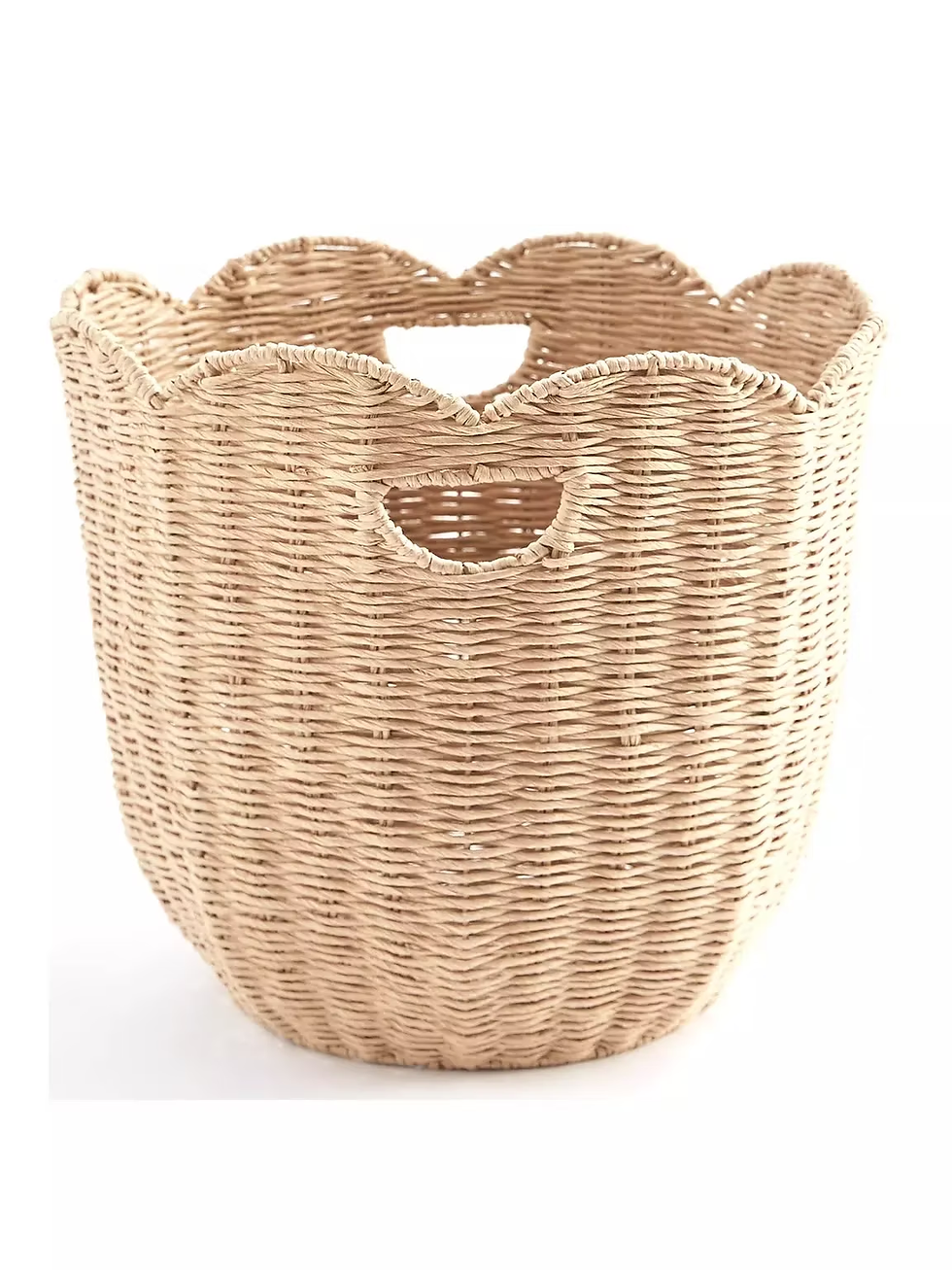
Suggested placement: a large woven laundry basket with side handles for family laundry rooms, bedroom storage, or towel grouping. Goldwoven lists this product as a large capacity woven laundry basket with integrated side handles.
How to build a stronger laundry basket wholesale range
A good range starts with three core functions. One basket should save floor space. One should carry more textiles. Another should add a decorative moment to the room.
For the space-saving role, tall cylindrical baskets are useful. They work in apartments, compact bathrooms, and hotel wardrobes. Also, they look neat in narrow product photos.
For the larger storage role, wide woven baskets with side handles make sense. They suit laundry rooms, bedrooms, and linen storage. In addition, they can hold bulkier items like towels and throws.
For the decorative role, scalloped rims, open-work sides, or two-tone finishes can add interest. However, the design should still hold a clear function. Pretty but unclear products are harder to place.
A balanced laundry basket wholesale program can also include nearby categories. Bathroom organizers, trays, tissue boxes, and home storage baskets can support the same story. This gives a display more depth.
Good, better, and feature styles
A “good” style should be simple and useful. It may use a natural finish, easy handle style, and familiar shape. This piece often supports volume because the use case is clear.
A “better” style can add a liner, stronger finish, or more refined handle. It still needs broad appeal. Also, it should photograph well in both bathroom and bedroom scenes.
A “feature” style can carry a stronger design detail. A scalloped rim, open-work structure, or high-handle shape can create visual interest. However, it should not become too hard to pack or display.
This three-level approach keeps the range practical. It also gives sourcing teams more room to match different retail shelves, hotel spaces, or storage collections. The product line feels planned, not accidental.
Avoiding overcomplication
Laundry baskets should not become design puzzles. A basket with too many features may look interesting at first. Later, it can become harder to produce, inspect, pack, and explain.
Therefore, one hero detail is usually enough. A high handle, a bold weave, a liner, or a color band can carry the style. Adding all of them may weaken the product.
Also, decorative baskets should still remain easy to use. If a person cannot lift it comfortably, the design has missed the point. Function should win.
For bulk programs, simple is often stronger. The best products tend to repeat because they solve a clear daily problem. They look good, but they also behave well.
Care, display, and use tips
Woven laundry baskets last longer when the use scene matches the material. Indoor woven baskets should stay dry and ventilated. Therefore, they work best in covered spaces, not wet floors or outdoor corners.
For daily cleaning, a dry cloth or soft brush can remove dust. Also, textile liners should be removed and cleaned according to fabric instructions. The basket itself should not sit in standing water.
In a store display, avoid crowding. A basket needs space around its rim and handles. Otherwise, the shape becomes hard to see from the aisle.
For hotel or spa use, group baskets by function. Clean towels should sit in one basket. Used textile bags should go in another area. This keeps the scene calm and easy to manage.
For photography, keep the basket lightly filled. Two folded towels can show scale. A half-full basket usually looks better than a stuffed one.
Also, show close-ups. A handle detail, rim detail, or liner edge can explain quality faster than a long product description. Small details make the product feel real.
Common selection mistakes
The first mistake is choosing only by appearance. A beautiful basket may still be wrong if the opening is too small. Therefore, a sample should be tested with real towels or garments.
The second mistake is ignoring carton size. Laundry baskets are bulky. If the shape does not nest or protect well, shipping costs and damage risk can rise.
Another mistake is picking too many finishes. A narrow finish palette looks cleaner. It also keeps product photography easier.
Also, some teams overlook handle comfort. Handles look minor in a catalog, but they matter during daily use. A basket that pinches the hand will not feel well designed.
Finally, range overlap can become a problem. If three baskets serve the same room and same function, one of them may be unnecessary. A better range gives each piece a clear job.
Choosing details for private label and project use
Private label planning starts with restraint. A logo can work, but it should not fight the woven texture. Therefore, a small woven label, hangtag, paper band, or carton mark may be enough.
Color direction should also stay grounded. A soft neutral finish can support more rooms than a loud seasonal shade. However, one accent color can work when the product line already has a clear story.
For project use, sample timing matters. A hotel room or spa layout often has fixed furniture, flooring, and lighting. Therefore, the basket should be reviewed in that actual material direction, not only against a white wall.
Also, packaging design should match the channel. A retail shelf may need visible labeling. A project shipment may need clearer carton marks and handling notes.
For e-commerce, product photos need scale cues. Towels, shelves, benches, and bathroom fixtures help show size. Without scale, even a good basket can feel uncertain online.
A reliable woven basket supplier can support these decisions with practical development discussion. The best result is not the most complicated product. It is the basket that fits the room, packs sensibly, and keeps its shape.
Final notes for a stronger sourcing brief
A clear brief should name the room first. Bathroom, bedroom, hotel room, laundry room, spa, and closet use each push the design in a different direction. Therefore, room planning should come before decoration.
Next, the brief should define function. Is the basket mainly for clothing, towels, linen bags, robes, or display textiles? This single answer changes capacity, liner, and handle decisions.
After that, the brief should define visual style. Natural, whitewashed, dark brown, two-tone, open-work, or lined styles all create different messages. However, the final choice should support the full range.
For category growth, a laundry basket wholesale plan should connect baskets with nearby storage products. Bathroom organizers, trays, shelf baskets, and tissue boxes can create a fuller collection. This makes the basket line easier to style and present.
For the final decision, selecting a woven basket supplier should feel practical, not dramatic. The best partner helps refine shape, material, handle, finish, liner, logo detail, and carton plan. Request a quote to review laundry basket styles, matching home storage pieces, custom packaging and bulk order details.
Three practical next steps
Define three use scenes before sampling: bathroom, bedroom, and hospitality storage.
Select one tall style, one larger capacity style, and one decorative feature style.
Confirm handle comfort, liner need, carton plan, and finish direction before bulk order discussion.
Procurement Checklist
Define the main room scene: bathroom, bedroom, hotel room, spa, closet, or laundry room.
Select the basket role: compact hamper, towel basket, large laundry bin, or decorative storage piece.
Review shape: tall cylindrical, rectangular, round, scalloped, or open-work.
Check handle type: high loop, side handle, cut-out, or wrapped handle.
Decide whether a liner helps the use case.
Confirm finish direction: natural, whitewashed, dark brown, two-tone, or custom tone.
Test sample use with towels, garments, or linen bags.
Review rim strength, base balance, and handle comfort.
Check nesting, carton fit, surface protection, and export packing logic.
Confirm label, hangtag, paper band, or carton mark needs.
Keep the range balanced with 3–5 clearly different styles.
Match baskets with related storage pieces for a fuller product story.
Comparison Table
Selection area | Best-fit basket direction | Main benefit | Watch point |
Compact bathroom | Tall cylindrical hamper | Saves floor space and looks tidy | Check rim recovery after packing |
Hotel wardrobe | High-handle woven hamper | Easy to move and visually clear | Protect handles during carton packing |
Laundry room shelf | Rectangular side-handle basket | Aligns with shelves and counters | Confirm side handle strength |
Spa towel area | Larger open woven basket | Holds rolled towels with a relaxed look | Add liner if small textiles are stored |
Bedroom corner | Natural wicker laundry basket | Warms the room and hides clutter | Match finish with bedding and wood tone |
Seasonal display | Two-tone or scalloped basket | Adds visual interest without loud color | Keep colors easy to repeat |
Private label range | Clean woven basket with small logo label | Supports brand presentation | Avoid oversized logo placement |
Export bulk order | Nestable or supported structure | Improves packing efficiency | Prevent rim compression and rubbing |
FAQ
What capacities sell best for laundry basket wholesale?
For laundry basket wholesale, capacity should follow the use scene. Compact baskets suit bathrooms and guest rooms. Larger baskets work better for laundry rooms, bedrooms, and towel storage.
Instead of guessing a fixed size, the smarter approach is sample testing. Place folded towels, shirts, or linen bags inside. Then check whether the opening, handle height, and base feel right.
Should woven laundry baskets include liners?
Liners help when the basket holds small garments, socks, delicate textiles, or hotel linen bags. They also give the inside a softer and cleaner look. Therefore, lined baskets work well for bedrooms and guest spaces.
However, towel display baskets may not need liners. An unlined open basket can show more woven texture. It also feels lighter in spa and bathroom displays.
Are lids necessary for all markets?
No. A lid works best when the basket needs a tidy, closed look. Bedrooms, closets, and guest rooms often suit covered hampers.
However, open baskets are easier for quick use. Laundry rooms, spa towel areas, and staff-use zones often benefit from faster access. The right choice depends on where the basket sits.
What handle styles are strongest?
Strong handle design depends on structure, material, and placement. High loop handles are easy to grab and suit tall or round baskets. Integrated side handles work well on rectangular shapes.
Also, the handle should feel comfortable when the basket has weight inside. Sample review should include lifting with towels or garments, not only looking at the empty basket.
How can bulk orders reduce shipping damage?
Good packing starts with shape review. Nesting, rim support, handle protection, and carton strength all matter. Also, light finishes may need surface protection to reduce rubbing marks.
For open-work styles, movement inside the carton should be limited. The basket should not shift, but it also should not be crushed. A balanced carton plan protects both shape and finish.
Can logos be added to wicker laundry basket styles?
Yes, logo presentation can be discussed through labels, hangtags, paper bands, or carton marks. A small logo detail often looks better than a large mark on woven texture.
For a cleaner result, the logo method should match the basket style. Natural woven hampers often pair well with fabric labels or kraft paper bands. Minimal styles may suit a small woven tag.