


goldwoven
Apr 18, 2026
How to choose premium woven baskets for retail collections based on use scene, product mix, and sourcing judgment.
A premium basket range does not win because it has the most shapes. It wins because the line feels useful at first glance and easy to place in real stores. That is why many import programs begin with a clear category view from a woven basket supplier, then move into finish, size, and scene planning. At the same time, a strong woven baskets supplier category page helps connect shelf storage, open display, lidded organization, and giftable forms without forcing the assortment into disconnected product picks.
Quick Summary
Premium collections work best when each basket has a clear role on shelf, in room, and in carton.
The strongest lines usually mix one clean core shape, one softer accent shape, and one or two practical support pieces.
Good baskets are easy to place. Better baskets also hold their shape, look balanced empty, and stay visually calm in a group.
The wrong basket is usually not “bad.” It is simply wrong for the scene, the shelf depth, or the collection tone.
Why buyers choose premium woven baskets
A premium basket earns its place quickly. On a shelf wall, it looks tidy from three feet away. In a styled corner, it adds warmth without stealing the whole scene. In a catalog spread, it supports blankets, toys, towels, or gift items without looking flimsy or overdesigned.
That is the first reason premium woven baskets matter: they do two jobs at once. They solve storage, and they improve presentation. Cheap-looking baskets often miss both. They can feel too loose in shape, too noisy in weave, or too generic in color tone. A stronger basket feels settled. Even empty, it still looks intentional.
There is also a range-building reason. A premium line makes merchandising easier because the products speak the same visual language. Rim shape, weave rhythm, handle style, and proportion stay in the same family. That kind of control matters more than adding ten extra styles that do not relate to each other.
For wholesale programs, the commercial value is simple. Easy-to-place baskets travel across more scenes. A clean rectangle can work in a bedroom set, a living room shelf display, a nursery page, or a holiday gift program. That flexibility is what keeps a collection alive beyond one season.
Natural inquiry point: For early line planning, it often makes sense to request a grouped quote by collection theme rather than by single SKU. That makes shape, finish, and packing decisions much easier to compare.
Best scenes for premium woven baskets
Some baskets look attractive in isolation but become hard to sell once they hit a real shelf. The stronger approach is scene-first selection. In practice, that means asking one simple question before anything else: where will this basket live most naturally?
Open shelving
Open shelving needs discipline. Straight-sided rectangles, cubes, and low bins usually work best because they read clean from the aisle and waste less visual space. A basket that fits neatly into standard shelf depths will almost always outperform a more dramatic shape that leaves awkward gaps.
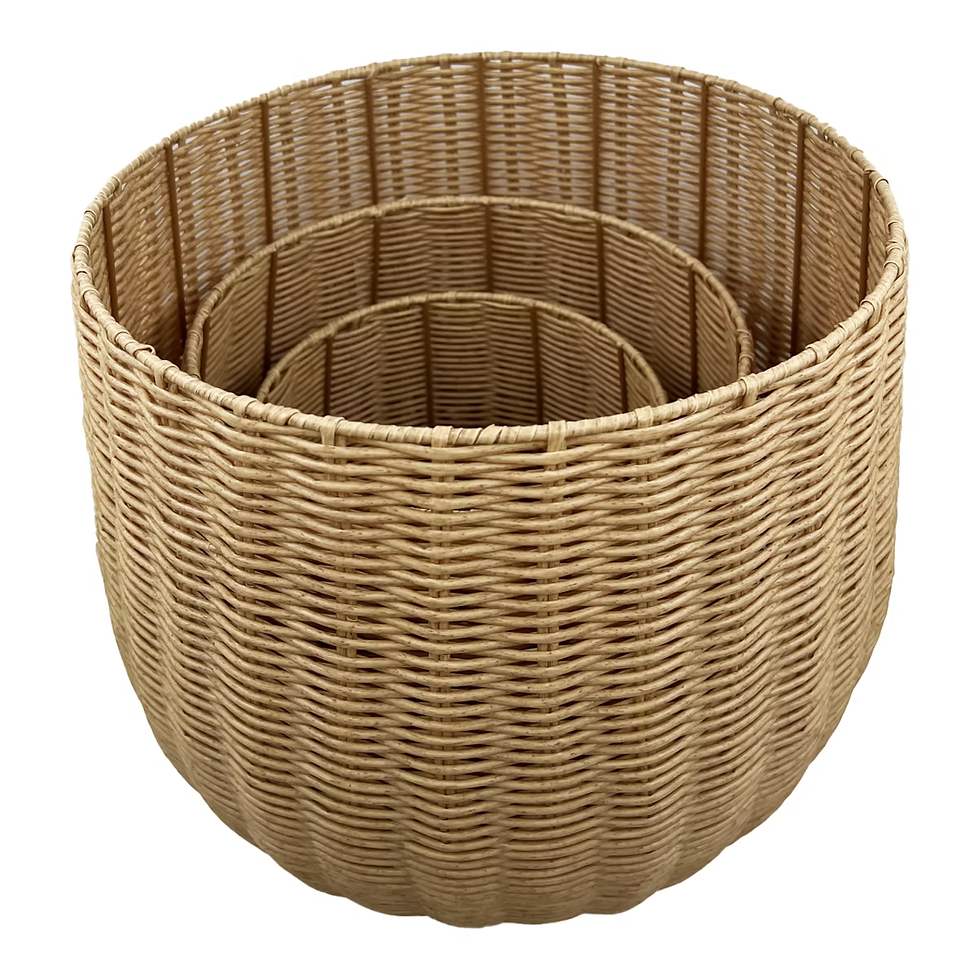
Suggested image placement: a nested, rounded stackable organizer works well in collection storytelling because it shows space-saving logic and a calmer natural tone. Goldwoven lists this product as Stackable Decorative Organizer Woven Storage Box Basket.
Living room styling
Living room scenes usually need softer texture and broader shapes. Low baskets for throws, magazines, or occasional storage perform well because they feel useful without making the space look busy. Rounded silhouettes help here, especially when the rest of the collection is more structured.
Entryway and utility corners
Entryway scenes need baskets that feel sturdy and visible. Open handles matter more in these spaces because movement is frequent. Tall bins, open-handle rectangles, and deeper floor baskets are often the right answer. This is where practicality beats novelty every time.
Suggested image placement: a deep open-handle bin fits entryway, utility, and shelf-overflow stories because the use case is obvious in one look. Goldwoven lists this item as Large Seagrass Storage Bin with Open Handle Grips.
Nursery and softer lifestyle edits
Nursery scenes need a gentler shape language. Rounded baskets, soft curves, and lighter tones usually feel more natural here than hard-edged, dark-stained forms. The key is restraint. One softer accent basket can lift the page. Too many novelty-driven shapes can make the range feel short-lived.
Clean modern display
A modern retail page often benefits from lighter tones and simpler silhouettes. Cream, sand, and pale natural shades feel easier to combine with textiles, ceramics, and wood shelving. This is where a softer PP rattan or clean woven form can give the range a fresher look.
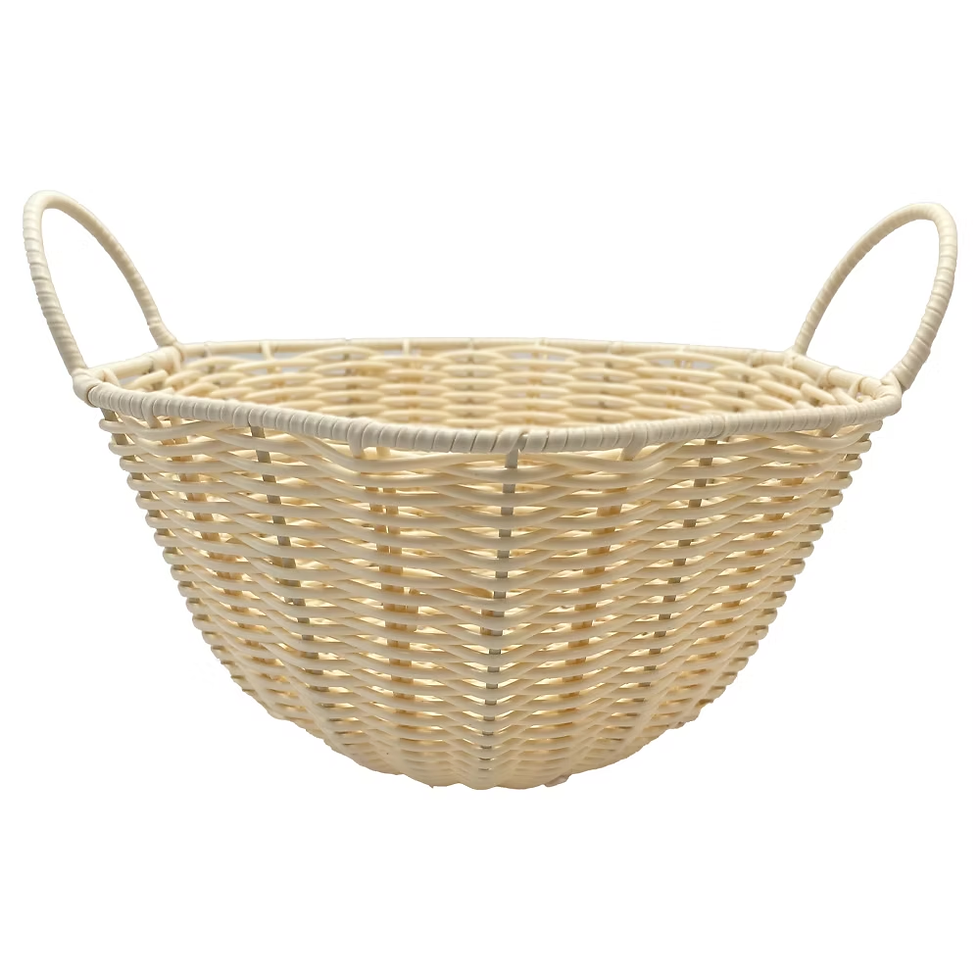
Suggested image placement: this cream-white handled basket suits cleaner modern edits, tabletop display, light nursery layouts, and gift presentation pages. Goldwoven lists it as Cream White PP Rattan Storage Basket with Ear-Shaped Handles.
How to judge whether a basket belongs in the collection
The easiest mistake is to judge too fast. A basket can look good in one image and still be wrong for the line. A better test is to look at four things in order: shape, scene, visual weight, and daily use.
1. Shape
Start with the outline. Does the basket look balanced empty? Does the rim sit straight? Do the side walls feel stable, or do they bow in a way that will look uneven on shelf? Premium baskets usually look composed before they are styled with anything.
2. Scene fit
Next, match the basket to one clear use scene. A good basket should answer this quickly. Shelf organizer. Throw basket. Nursery bin. Entryway catch-all. Gift basket. If the use case feels vague, the product may be harder to merchandise.
3. Visual weight
Every collection needs breathing room. Dense texture, dark color, heavy weave, thick rims, and bold handles all add weight. That can be useful, but not everywhere. If every piece in the line looks visually heavy, the collection gets tiring. A good range usually mixes calm shapes with one or two more textured statements.
4. Daily handling
Look at how the basket will actually be touched. Are the handles easy to grip? Is the opening wide enough for the intended contents? Can the shape stack, nest, or sit flat? Those details decide whether a product stays practical after the first display setup.
One especially strong test is group review. Put the baskets together mentally, not one by one. A line should feel related without feeling repetitive. That is often the difference between a collection that feels premium and one that feels like random sourcing.
Common mistakes that weaken a premium basket line
A lot of range problems start with good intentions. The line wants more personality. The page wants one more “wow” item. The showroom table wants more variety. Then the assortment loses control.
Mistake 1: choosing novelty over use
A basket shaped like a conversation piece may get attention once. Still, the product that ships again is usually the one that fits a shelf, holds daily items, and looks good with minimal styling. Novelty should support the collection, not lead it.
Mistake 2: mixing too many weave stories
One basket has a loose rustic look. Another has tight synthetic rhythm. A third uses a soft matte braided surface. Individually, each may work. Together, the line can look borrowed from different brands. Premium collections need one visual language, not four.
Mistake 3: ignoring how the basket looks empty
This happens often. Styling hides a lot. Once the basket is empty on shelf, weak shape control becomes obvious. A strong basket should still look finished when there is nothing inside it.
Mistake 4: forgetting the shelf depth
Some baskets are simply too deep, too wide, or too tall for the fixture they are meant to support. This is not a minor issue. It directly affects placement, photography, and reorder logic. A clean fit is more valuable than a clever silhouette.
Mistake 5: building a line with no calm core item
A premium line still needs one reliable foundation piece. Usually that is a shelf basket, a cube, a handled bin, or a lidded organizer. Without that anchor, the range may look interesting but still feel commercially unstable.
What makes a good “yes” basket
A good yes-basket usually has one obvious advantage. It might save space. It might soften a rigid shelf wall. It might work across several scenes. It might bring texture without becoming visually loud. The point is clarity.
One of the easiest yes-types is the foldable cube. It gives the collection useful geometry, supports shelf use, and still feels warmer than a plain storage box. It is practical, but it is not dull.

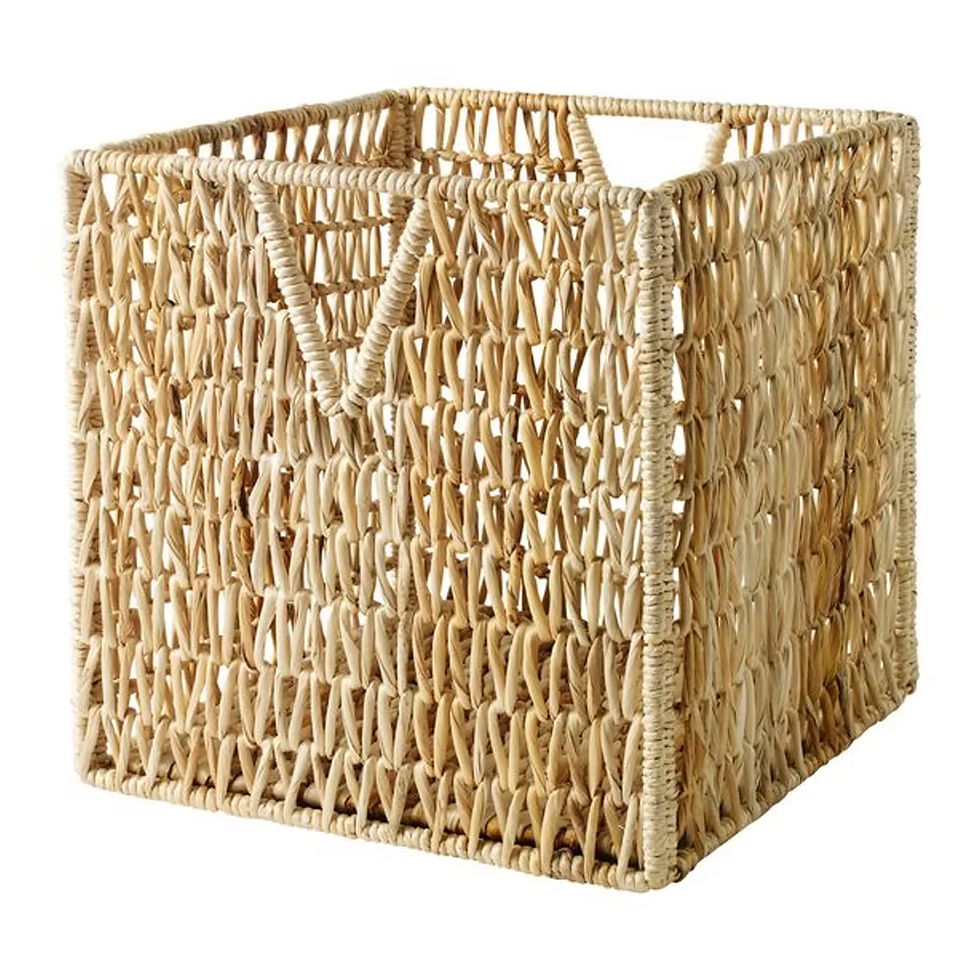
Suggested image placement: a folding cube with a decorative face works especially well in shelf, cube-unit, and entryway edits because it balances utility with visible weave character. Goldwoven lists this piece as Folding Water Hyacinth Storage Cube with Decorative Sunburst Weave.
Another yes-type is the lighter-toned handled basket. It feels open, usable, and easy to combine with other product families. These are often strong support items because they do not fight the hero pieces.
Finally, a grouped assortment should include at least one basket that makes packing and display easier, not harder. That sounds unromantic, but it matters. Collections succeed when the pretty item and the practical item can live together.
Natural inquiry point: When narrowing a range, it helps to request a side-by-side quote for one core shelf shape, one handled accent, and one deeper storage bin. That format makes the collection logic much clearer before sampling.
Why work with Goldwoven
Goldwoven presents its woven category around home storage, retail-ready product groupings, and custom development support across multiple basket-related product types. The site’s home storage category highlights organization, decorative display, and wholesale program planning rather than single-item selling, which fits collection-based sourcing well.
That wider category structure helps when a line needs more than one visual role. A retail assortment may need a core shelf organizer, a softer open basket, a foldable cube, and a larger floor bin. Goldwoven’s product pages show that spread clearly across home storage styles, handled baskets, stackable options, and decorative shapes.
The other advantage is practical variety within a single visual ecosystem. On the site, newer basket options include stackable woven organizers, cream-toned PP rattan handled baskets, folding water hyacinth cubes, and large seagrass bins with open grips. That mix is useful because it covers several room scenes without forcing the collection into one rigid look.
Buyer Checklist
Does each basket have one clear scene of use?
Does the basket still look balanced when empty?
Is the opening practical for the intended contents?
Do the handles feel visually integrated, not added on?
Does the weave look calm enough to sit beside other SKUs?
Is there at least one core item that can anchor the whole line?
Does the collection mix light and heavier visual textures?
Will the basket fit standard shelf depths or display tables?
Can the assortment be understood in ten seconds from a category page?
Is the line practical enough to reorder, not just launch?
Comparison Table
Selection question | Strong collection answer | Weak collection answer |
Why choose this basket? | Clear use, clean shape, easy placement | Only looks interesting in one photo |
Where does it work? | Shelf, floor, gift, nursery, or utility scene is obvious | Use case feels vague |
Does it support the line? | Matches tone, weave rhythm, and proportion | Pulls the range off balance |
Is it practical? | Easy to hold, place, and style | Awkward opening, unstable shape, hard fit |
Will it age well? | Calm form, repeatable appeal | Trend-driven or overly novelty-based |