


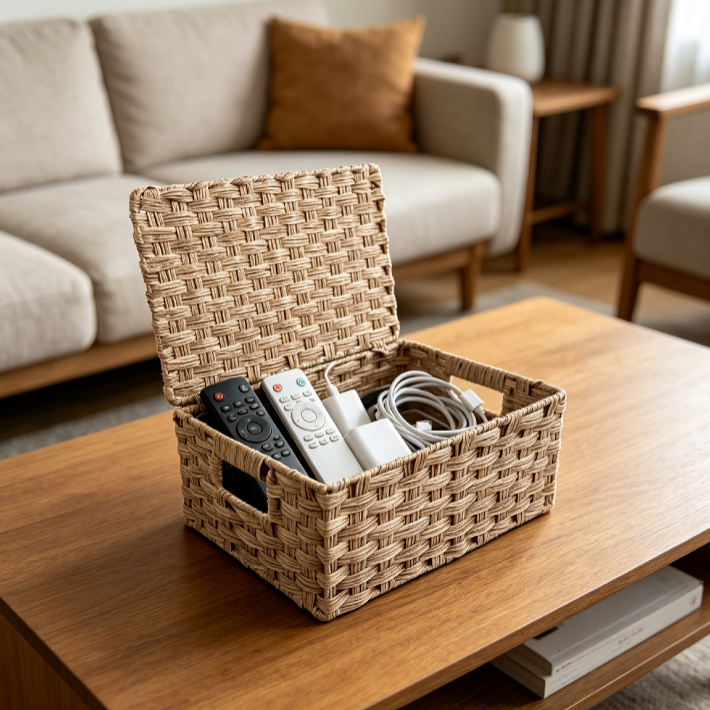
goldwoven
Apr 21, 2026
A Practical Guide to Shelf, Closet, Display, and Bulk Assortment Planning
A storage line usually succeeds for a simple reason. It makes ordinary rooms easier to reset. A basket on a shelf turns loose objects into one calm block. A lidded box on a closet top removes visual noise in seconds. That is why custom wicker baskets still matter in home organization, and why wholesale storage baskets remain a practical category for shelf programs, closet sets, open displays, and curated home collections.
This category works best when it stays grounded in real use. A basket has to fit the shelf, slide out easily, look balanced in a row, and support a repeatable assortment. Style matters, of course. Still, in storage, the best-looking product often starts with a practical shape. A clean rim, a stable base, a useful opening, and a sensible depth usually matter more than decorative detail.
Goldwoven’s homepage presents woven basket development around wholesale and custom programs, while the storage basket category frames the range around decorative display, organization, and retail-ready use. That combination is useful for assortment planning because it connects collection identity with everyday function.
In many retail programs, storage baskets sit in a useful middle ground. They are decorative enough to stay visible. At the same time, they are functional enough to justify repeat placement across several rooms. One format can work in a closet, then shift into bath storage, then move into seasonal display. That flexibility is exactly what gives the category staying power.
The strongest lines rarely depend on novelty. Instead, they depend on calm shapes that make daily life look more ordered. A square organizer reads clearly in a cube shelf. A rectangular lidded box gives structure to an upper closet shelf. A lower open basket supports table presentation without hiding the goods inside. When the shape matches the scene, the product becomes easier to place and easier to reorder.
That is also where line planning gets serious. A storage assortment does not need endless variation. It needs disciplined variation. One or two open forms, one concealed form, and one flexible display-oriented piece can often build a stronger category story than ten loosely related baskets. In practice, that is what makes the difference between a random sourced range and a coherent basket program.
Why storage baskets still convert in home organization
Storage baskets continue to convert because the value is obvious. In a room with open shelving, visual order matters almost immediately. A folded towel stack looks neat for a while, but a basket makes that neatness easier to keep. In a hallway, a shelf basket turns scattered small objects into one contained zone. In a bathroom, a medium woven bin gives spare items a place without making the room feel cold.
There is also a material reason. Woven baskets soften the storage story. Hard containers can do the same functional job, yet they often look temporary or purely utilitarian. Wicker, rattan-look, seagrass, straw, and similar woven materials feel warmer and more integrated with furniture, shelving, and textiles. That difference matters in visible rooms where storage needs to look intentional, not improvised.
Another advantage is category overlap. Storage baskets are not trapped in one part of the home. A rectangular basket that begins in a closet can work later in a pantry, a guest room, or a console shelf. A shallow display basket can hold packaged goods today and seasonal decor next month. That kind of flexibility supports more stable assortment planning.
Even small details influence product performance. A basket that is half an inch too tall may fail on a shelf. A lid that sits awkwardly can make an organized closet still look messy. A handle that projects too far from the body may interrupt clean shelf repetition. These are not dramatic issues. Still, they shape whether the product feels easy to live with.
For that reason, strong storage baskets often feel almost quiet. They do not rely on exaggerated styling. They rely on fit, rhythm, and repeatability. The best shelf basket does not need to surprise anyone. It only needs to pull forward smoothly at 8 a.m., look calm at noon, and return to the shelf without friction.
This is one reason flat and structured storage boxes remain useful. They conceal mixed contents, help closet shelves look more composed, and give the assortment a more architectural profile. Goldwoven’s broader product range and storage pages repeatedly present woven storage around organization, decorative display, and wholesale-oriented assortment use.
How to choose the right wholesale storage baskets
The cleanest way to build a storage assortment is to begin with use scenes. Starting with weave alone sounds tempting, but it often leads to a scattered line. A stronger path begins with questions that are harder and more practical. Where will the basket live? What will it hold? How often will it move? Does the product need to show contents or hide them?
Shelf storage usually demands strict dimensions. Width, depth, and height all matter because the basket must sit in a fixed space and still remain easy to reach. A product can look attractive in isolation and still fail because the rim catches the shelf above it or the body wastes space at the sides. For this reason, straight-sided rectangles and compact squares usually carry more long-term value than expressive shapes in a core line.
Closet storage introduces another layer. Concealment often matters as much as capacity. Mixed soft goods, small accessories, and occasional-use items can make a shelf look busy even when technically organized. A lidded or higher-wall basket fixes that problem by controlling what the eye sees first. In storage programs, visual order is part of the function.
That is why a structured lidded box deserves a place in many basket assortments. It hides irregular contents, keeps the top line neat, and gives the collection more discipline. In practice, this format works well for closet tops, folded linens, and smaller home goods that benefit from a cleaner finish. Goldwoven offers a rectangular PP rattan storage box with a hinged lid that fits this concealed-storage logic well.
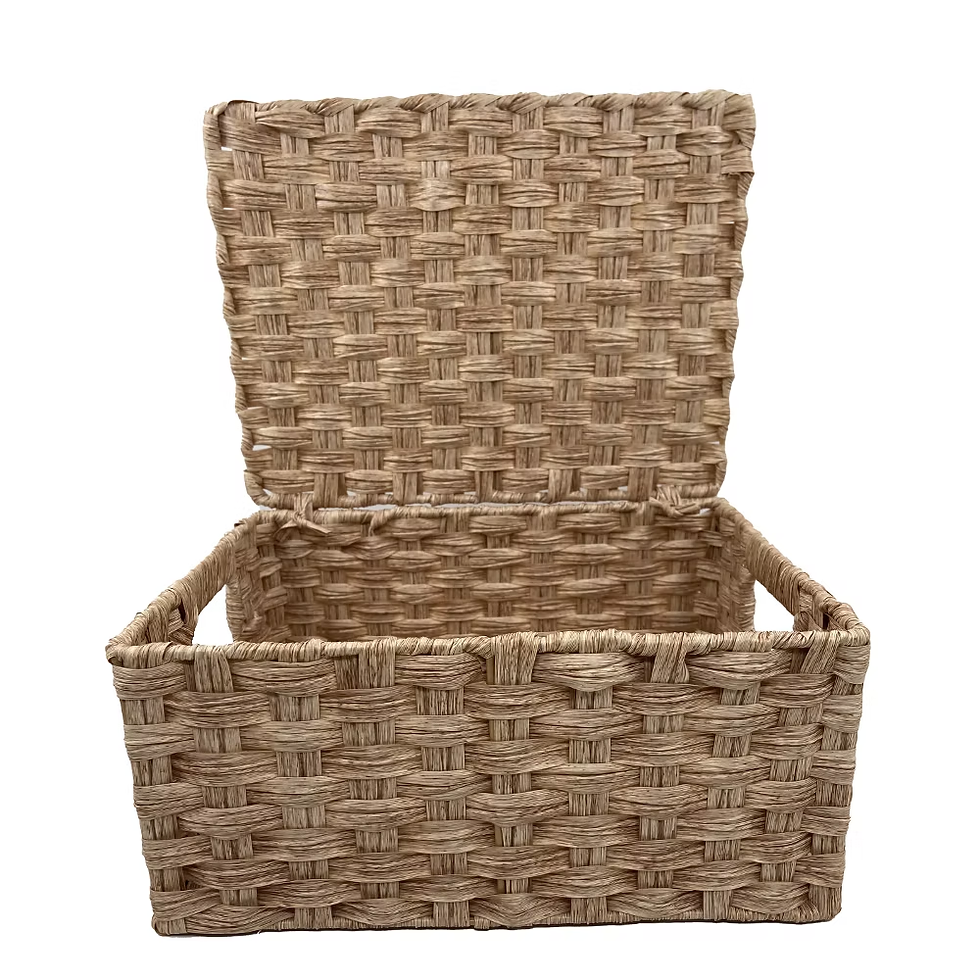
Rectangular PP Rattan Storage Box with Hinged Lid from Goldwoven, useful for concealed shelf storage and structured wholesale basket assortments.
Open display use works differently. A display basket must support merchandise without overpowering it. If the basket walls are too high, the contents disappear. If the shape is too busy, the basket competes with the goods inside. This is why lower open forms, moderate wall heights, and simple silhouettes usually work best for tabletop display, seasonal gifting, or bath presentation.
Movement matters too. Some baskets stay on the same shelf for months. Others get handled all day. A stationary shelf box can focus on clean geometry. A frequently moved basket needs better grip logic and a stable feel in the hand. That difference should shape material, wall rigidity, and handle treatment early in development.
A practical selection process usually includes these checks:
room or display scene
outside dimensions and usable inside space
open or concealed access
handle logic and grip comfort
wall height and rim structure
nesting or stacking potential
finish direction across the range
carton efficiency and set structure
This is where custom wicker baskets become especially useful. A custom range can keep a consistent design language across several shapes without forcing every product into identical dimensions. Goldwoven’s homepage emphasizes wholesale woven basket development and custom basket support, which aligns well with this type of assortment building.
A good line also benefits from restraint. Not every storage program needs a dramatic hero shape. In many cases, one open square, one open rectangle, one lidded format, and one more decorative display basket are enough. That mix covers daily storage, visual order, and merchandising variety without diluting the collection.
Wicker storage baskets by shelf closet and display use
Shelf and cube storage
Shelf baskets work hardest when they look simple. In a cube unit, straight lines matter more than ornament. A basket that fills the space neatly feels intentional. A basket that bulges or wastes visible room looks improvised. For that reason, square and near-square organizers often anchor the category.
Cube storage also rewards consistency. When several baskets repeat the same shape, the shelving system looks calmer. That visual rhythm becomes part of the value. The product is not only holding things. It is making the room feel finished.
On open shelves, access speed matters. A basket should pull forward easily, offer a clear opening, and return to place without snagging on neighboring products. Wide openings help because contents can be read from above. Compact proportions help because the shelf still needs breathing room.
Closet shelves and upper storage
Closet programs usually need more control. Open baskets can work for neat categories like folded scarves or towels, yet mixed contents often require higher walls or lids. Otherwise, the shelf still looks busy. In real use, the problem is not just overflow. The problem is visual interruption.
Flat lidded boxes and structured rectangular storage containers work especially well here. They create a cleaner horizon line across the shelf and help upper storage feel deliberate instead of temporary. This is important in wardrobes, linen closets, and utility shelves where repeated forms need to read as a system.
Proportion matters as much as capacity. Very tall baskets can seem efficient, but they become awkward once shelf clearance tightens. Medium-height boxes often perform better because they stay reachable and look calmer in a row.
Bathroom, guest room, and bedside storage
Bathroom storage benefits from light visual weight. Woven baskets in this setting should feel useful, but not heavy. A medium open basket can hold towels, spare tissue packs, or soap sets while keeping the room soft and breathable. In guest rooms, the same logic applies to slippers, mini amenity kits, magazines, or tea items.
Bedside and small-surface storage ask for compact forms. Oversized baskets overwhelm the furniture. Smaller, disciplined baskets help the room feel organized without turning every corner into storage.
Tabletop and display use
Display baskets ask a different question. They need to hold, frame, and show product at the same time. An open top helps. Moderate wall height helps too. If the basket is too deep, packaged goods disappear from view. If the weave is too dominant, the basket steals attention from the products it is meant to support.
That is where an open decorative shape can be useful. A semicircle woven basket feels lighter on a table than a deep storage bin, and it keeps the arrangement visible from the front. In assortment planning, this kind of format works well for seasonal sets, smaller lifestyle presentations, and open retail displays. Goldwoven offers a colorful semicircle woven storage basket that suits this exact scene.
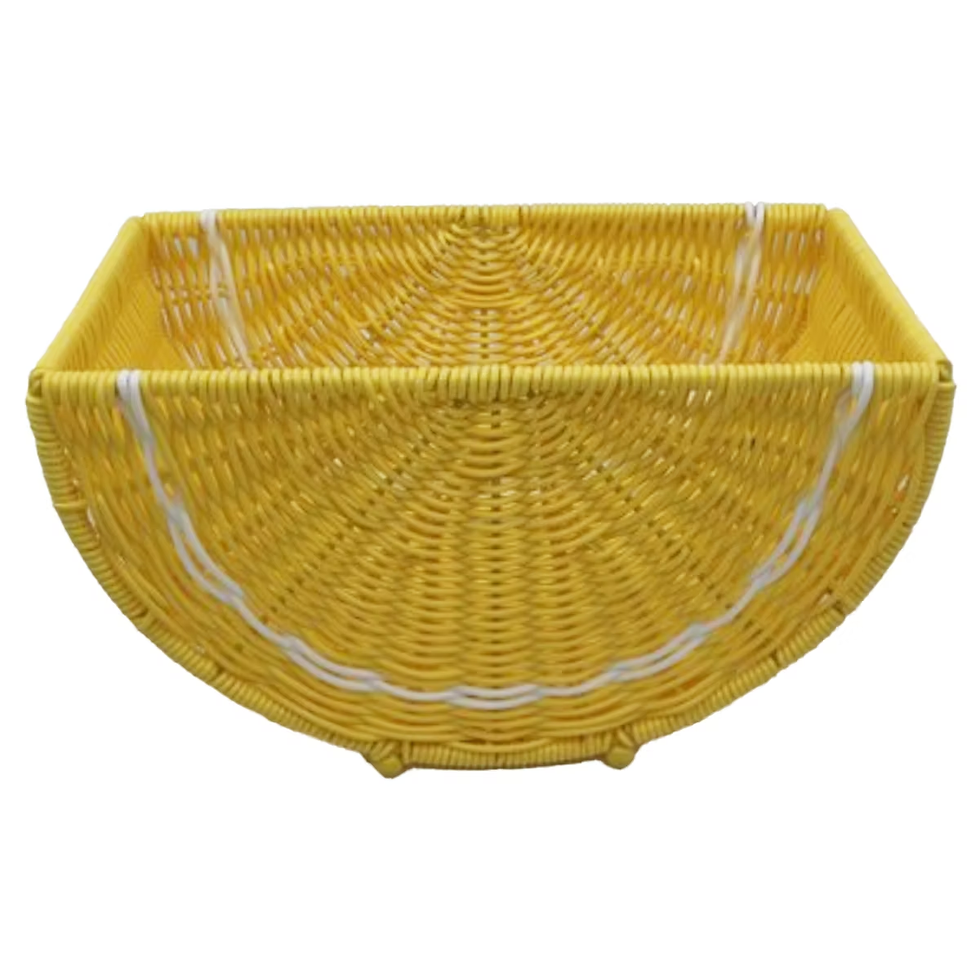
Colorful semicircle woven storage basket from Goldwoven, suited to open display, countertop assortments, and decorative storage programs.
Flexible display and crossover use
The best display baskets often have crossover value. A lower open basket can support gift presentation, then shift into bath organization, then move into shelf styling. That makes the format more resilient inside a broader basket line.
For wholesale storage baskets, this kind of flexibility matters. A basket that only works in one narrow scene can feel fragile at assortment level. A basket that works in two or three scenes has more room to stay useful across resets and seasonal changes.
Materials sizing and finish options
Materials shape the tone of a basket program immediately. A tighter weave usually looks cleaner and more architectural. A looser or more irregular woven surface can feel softer and more decorative. Neither direction is inherently better. The right choice depends on the room, the intended contents, and the visual role of the basket inside the collection.
Natural wicker tones remain a dependable base because they pair easily with white shelving, warm wood, black metal, neutral textiles, glass containers, and ceramic accessories. This flexibility is one reason woven storage keeps appearing across home organization, gifting, and display categories. The material behaves like a bridge between function and decoration.
Goldwoven’s woven basket and storage pages describe a broader range that includes wicker, rattan-look materials, water hyacinth, seagrass, straw, and related woven forms, along with custom development around size, shape, finish, labeling, and packaging. That breadth matters because different storage scenes often need different surface qualities and structural behaviors.
Sizing deserves equal attention. A basket can be beautiful and still underperform if it does not fit the furniture or the intended category. In real assortment planning, sizing is where commercial logic often becomes clear. A basket that is too small feels vague. A basket that is too large becomes harder to place and harder to ship.
Most stable lines depend on a usable mid-range. Small formats work for vanity tops, entry consoles, or smaller display bundles. Medium formats support the widest range of scenes, from shelf storage to folded towels to countertop grouping. Large formats help for throws, bulk textiles, or floor placement, but they need more deliberate positioning.
Height matters as much as width. Lower baskets are excellent for open display and shallow shelves. Mid-height walls help contain loose items without hiding them. Taller walls make sense when the contents are visually noisy or when concealment matters more than instant visibility. Still, too many tall baskets can make a whole storage line feel heavy.
Finish choices should stay disciplined. A natural base often anchors the range best. One darker wash or contrast accent can extend the assortment without making it look unfocused. Too many unrelated finishes, by contrast, can make even strong basket shapes feel like leftovers from different collections.
A more structured woven box is useful when discussing the relationship between finish and form. The silhouette feels tidy, the woven surface still adds warmth, and the shape supports shelf storage, closet placement, or giftable display. Goldwoven’s decorative bamboo weave pillow box works well as this kind of visual reference because it bridges structure and texture.

Decorative Bamboo Weave Pillow Box from Goldwoven, suitable for shelf storage, closet organization, and structured retail basket collections.
Lining should also be evaluated practically. An unlined basket often keeps the silhouette crisp and shows the weave more clearly. A lined basket can be useful when the weave is more open or when the contents need a smoother interior. The question is not whether lining sounds more premium. The real question is whether the contents actually need it.
Private label and custom wicker baskets
Private label works best when it solves sameness. Many storage baskets in the market are perfectly usable, yet they do not feel like a collection. Shapes drift. rim details change. Lid profiles do not align. Handles belong to different visual languages. The result feels assembled rather than developed.
That is where custom wicker baskets become commercially valuable. The best custom work is often subtle. A tighter corner radius can make a shelf basket feel more architectural. A slightly lower lid profile can improve stacking and visual calm. A more consistent rim treatment can make open and lidded forms read as one family. These are modest changes, but they build stronger collection memory.
Collection memory matters in home organization because the category often depends on repeat viewing. A storage line should feel coherent from the first product image to the in-store shelf. If an open shelf organizer, a concealed storage box, and a decorative display basket all share the same woven language and finish logic, the range feels intentional.
Goldwoven’s homepage places custom and wholesale woven basket development at the center of its offering, including custom wicker baskets, while the storage basket category frames the practical product side of that work. That connection is important because a successful storage program needs both collection identity and everyday use value.
A useful private-label structure often follows this order:
define the core shape family
set the size ladder
choose the lid or open-access balance
standardize rim treatment and edge finish
refine the color and finish direction
confirm labels, wrap bands, and packaging details
Those last presentation details should stay supportive. They are important, but they should not carry the product story by themselves. When the basket shape is strong, branding can stay light and still look polished. When the basket shape is weak, extra packaging rarely fixes it.
Another practical point is scale. A custom storage line does not need ten hero forms. In many cases, one square organizer, one rectangular shelf basket, one lidded box, and one more decorative display format are enough. That structure keeps the range usable and recognizable at the same time.
Merchandising logic for wholesale storage baskets
A basket line is not only a set of individual products. It is a merchandising system. Some ranges fail because every piece is acceptable alone but unrelated together. Others work because even the smallest pieces share one visual logic. That logic usually comes from repetition with controlled variation.
Repetition creates calm. Variation prevents boredom. In practice, that means repeating the weave language, base tone, and edge profile while adjusting shape, height, and openness according to use scene. One form for shelves. One for concealed closet storage. One for display tables. One for decorative crossover use. That is enough to build a coherent story.
At category level, wholesale storage baskets work best when the line includes both “show” formats and “hide” formats. Open baskets support access and presentation. Lidded formats support order and concealment. Decorative open forms widen the merchandising story without forcing the category into novelty. Goldwoven’s storage basket category explicitly presents woven baskets for decorative display, organization, and retail-oriented sourcing.
Store merchandising needs rhythm. A display should create height changes and shape shifts without chaos. Too many baskets of the same height can make a table look flat and heavy. Too many unrelated silhouettes make it look unsettled. The right mix gives the eye steps rather than noise.
Open decorative baskets can help with that balance. A basket with a shaped rim can soften the harder lines of boxes and rectangles, especially in tabletop merchandising, gifting, or seasonal display. Used carefully, this kind of piece prevents the assortment from feeling too rigid while still staying inside the broader storage story. Goldwoven’s scalloped edge rattan storage basket is a good example of this softer display role.

Scalloped edge rattan storage basket from Goldwoven, designed for decorative tabletop storage and retail display applications.
Online merchandising follows a slightly different rule. The basket silhouette must read quickly in a single image. Clean sidewalls, clear opening shapes, and obvious proportions usually perform better than fussy details. A product that makes sense at a glance is easier to place on category pages and easier to compare across a collection.
Cross-merchandising gives storage baskets extra strength. A medium woven basket can hold folded cloth, packaged soap, candles, stationery, or seasonal goods without feeling out of place. That range of use helps the category stay relevant beyond one narrow room story.
Sourcing checklist before bulk order
A bulk basket order should start with a scene check, not with a style mood alone. The product may look correct in one product image and still create problems later if dimensions, wall height, lid fit, nesting, or carton logic were not clarified early. In storage, practical details shape long-term performance.
Start with the intended placement. A shelf basket needs exact outside dimensions. A closet-top box needs lid clearance. A bath basket needs the right wall height for towels or amenity sets. A display basket needs an opening that supports visibility. These first checks save time because they keep the conversation tied to real use.
Then review inside capacity, not only the outer silhouette. A lidded box can appear generous while losing usable space to thick walls or a structured top. A basket that seems deep enough in a photo can feel unexpectedly tight once folded items go in. This is why both outer and inner dimensions should be treated as key product information.
Structure matters next. Does the base sit evenly? Does the rim look calm from the front? If the basket nests, does the release feel smooth? If the lid closes, does it settle with a clean top line? These details are not small in a storage line. They directly shape whether the assortment feels refined or unfinished.
Carton logic should enter early too. Nested forms often improve shipping efficiency. Flat rectangular boxes can use space well if proportions stay disciplined. Mixed sets may sound attractive, yet they become awkward if size relationships were never designed with packing in mind. Product planning and packing planning should move together.
A useful sourcing checklist includes:
intended room or display use
outside size and usable inside space
open, covered, or hinged-lid access
rim finish and wall rigidity
handle or grip treatment
nesting or stacking behavior
finish consistency across sizes
set composition and visual balance
label or wrap-band placement
inner pack structure
carton planning and master carton logic
image readiness for online listing and catalog use
Goldwoven’s woven basket pages repeatedly describe products in terms of home storage, decorative display, hospitality-style organization, and wholesale collection development. That kind of framing is helpful because it keeps basket sourcing tied to actual use rather than vague styling language.
Carton planning and assortment structure
Cartons rarely get enough attention in basket planning. Yet a line can look excellent in sample form and still become inefficient once multiple heights, lids, and unrelated proportions start competing in bulk packing. In storage, carton logic is not a background detail. It is part of the product decision.
Nested formats often help the most, provided the size steps are designed properly. If the height and flare relationship is wrong, the nesting benefit disappears. If the difference between sizes is too small, the set may look repetitive without delivering a real packing advantage. Good nesting needs both visual logic and space logic.
Structured boxes bring a different kind of efficiency. Their clean geometry often helps both shelf placement and packing. Flat or moderately proportioned boxes can also support better visual repetition once they reach the store or the end display environment. This makes them useful anchor pieces in a storage line.
Assortment width should stay controlled. One open square, one rectangular shelf basket, one concealed box, and one softer display-oriented basket can cover a surprising number of use scenes. More shapes are possible, but each added format should solve a real problem or open a real display opportunity.
This is one reason the best storage lines usually look narrower than expected. They do not try to solve every room with a different silhouette. They repeat one design language and let scale, openness, and lid treatment carry the variation. That approach tends to be easier to merchandise and easier to maintain.
Pairing ideas that make storage baskets easier to place
A basket collection becomes stronger when it pairs naturally with adjacent categories. Woven materials already sit comfortably beside wood, linen, ceramic, matte metal, glass canisters, and cotton goods. Because of that, storage baskets can support several kinds of home presentation without looking forced.
On shelf systems, square and rectangular baskets pair neatly with folded textiles, paper goods, and boxed accessories. In closets, lidded formats work well with off-season pieces, spare linens, or occasional-use categories. In bathrooms, medium baskets sit naturally beside towels, soap bars, tissue packs, or fragrance items. On tables, lower open forms can support gift bundles, candles, or packaged goods.
Display programs can use the same logic. A semicircle or softly shaped basket beside candles and folded napkins creates a lighter table story. A more structured box beside stationery or folded cloth makes the storage angle feel intentional. A shaped-rim basket beside ceramics or bath accessories adds variation without breaking the collection.
This is another reason custom wicker baskets remain useful in wholesale storage programs. Pairing works better when the pieces already share one consistent design language. The line does not need to fight for coherence every time it appears in a new setting.
Final selection notes for long-running storage lines
The strongest storage basket lines are rarely the loudest. They are the ones that make rooms easier to use. A shelf basket that slides neatly into place will often outperform a more expressive form with awkward dimensions. A lidded box that calms a closet top can deliver more long-term value than a novelty piece that only works in one styled scene.
For that reason, line planning should stay practical. Start with the room. Move to the dimensions. Then decide whether the scene needs openness or concealment. After that, refine finish, weave language, and presentation. Once those steps are stable, the basket line usually starts to feel reliable.
For category development, wholesale storage baskets make the most sense when they balance function and visual order, while custom wicker baskets help hold the whole assortment together as a recognizable collection. Goldwoven’s homepage and storage basket category both support that combined direction of custom development and wholesale basket planning.
A tight basket program does not need to say everything. It only needs to solve the right scenes clearly, repeat that logic across the range, and leave enough room for the collection to stay useful over time.
Three practical actions for the next development step:
Define the first three use scenes before expanding the line. Shelf, closet, and display usually cover the strongest core.
Keep one finish family and one shape language across the whole range, even when sizes change.
Review lids, nesting, and carton logic during sample evaluation, not after the assortment structure is already fixed.
Ask for customization and wholesale storage basket options.
F. Buyer Checklist
Buyer Checklist
Define the first room or display scene for each SKU before reviewing decorative details.
Record both outer dimensions and usable inner dimensions.
Separate open-access baskets from concealed-storage formats early in the range.
Check whether the collection needs square, rectangular, lidded, or decorative open forms.
Confirm rim finish and wall stability across all sizes.
Keep the finish family disciplined so the line reads as one collection.
Review whether lining adds real functional value or only visual complexity.
Clarify if the baskets should nest, stack, or remain stand-alone pieces.
Plan inner packs and master cartons together with the shape family.
Check how each basket reads in one front image for e-commerce use.
Keep tags or wrap bands simple so the basket remains the focus.
Reserve more expressive silhouettes for display support, not for the entire core range.
G. Comparison Table
Format | Best Use | Main Strength | Watch Point | Best Role in a Program |
Open square organizer | Cube shelves, bathroom counters, side tables | Clean geometry and easy repeat on shelving | Contents stay visible | Core everyday organizer |
Open rectangular shelf basket | Closets, pantry shelves, folded linens | Efficient footprint and easy reach | Rim and grip treatment matter | Core shelf-storage shape |
Rectangular hinged-lid box | Closet tops, concealed shelves, mixed contents | Strong visual order and cleaner top line | Lid fit and height must be right | Core concealed-storage piece |
Structured woven box | Shelf styling, closet storage, gifting crossover | Balanced texture and neat silhouette | Needs clear size positioning | Premium supporting format |
Open semicircle display basket | Countertops, gift tables, lifestyle displays | Light front-facing presentation | Too much depth can hide contents | Display-friendly accent shape |
Decorative shaped-rim basket | Table merchandising, bath display, seasonal styling | Softens rigid assortments | Should not overpower the core line | Display and crossover accent |